You Handle Crises For Everyone Else. Who Handles It for You?
Two days of training built specifically for the people who operate under the kind of stress most people will never experience — from an instructor who lived it for 20 years.
“I’m not paid to panic.
I’m paid to do my job.”

Built for the People
Who Run Toward the Problem
Bad decisions don't come from
lack of training.
They come from unmanaged stress.
First responders know this better than anyone. You’ve seen what happens when the brain goes into survival mode at the wrong moment — when a situation that should have de-escalated didn’t, when someone who was trained to handle it froze, overreacted, or made a call they couldn’t take back. The stress response doesn’t care about your training. This course teaches you how to interrupt it.
Two Courses.
One Complete System.
In high-stakes moments, poor decisions rarely come from lack of training. They come from unmanaged stress pushing the brain out of logical thinking and into instinctive reaction — at exactly the moment when deliberate control matters most. John Wilson lived this for 20 years. He built a system to interrupt it.
- How stress alters perception, memory, and decision-making in real time
- Why emotional reactions override logic under pressure — and how to stop it
- Techniques to regulate heart rate, breathing, and autonomic responses
- Prediction training to recognize how situations develop before they escalate
- Stress inoculation strategies to sharpen performance when stakes are highest
- Post-event recovery and self-assessment tools for long-term resilience
“The things we experience in law enforcement, fire, and EMS are cumulative. We are really good at suppressing it. But you just never know what that tiny little catalyst is going to be to unleash all of it.”
— John Wilson, CBLTAC- How to recognize early indicators of developing threats in any environment
- Managing unwanted encounters before they escalate — on and off duty
- Smart movement, positioning, and escape options under stress
- Boundary-setting and verbal de-escalation strategies that work in the real world
- Personal security considerations for first responders traveling or off duty
- What actually happens in your body and brain under first-responder-level stress
- The difference between acute stress (in the moment) and chronic stress (over time)
- Seven proven methods to reduce and control stress — immediately and long term
- How cumulative stress erodes judgment, health, and relationships over a career
- Techniques you can use today — on shift, at home, and in the field
“I would much rather see someone do this at 5 years into their career than wait until 20 years in. Because it’s cumulative. And we’re really good at suppressing it — until we aren’t.”
— John Wilson, CBLTACA full-day intensive built around two of the most underserved gaps in first responder training: real-world safety awareness for life on and off duty, and the science-backed tools to manage the cumulative stress load that defines a career in public service.
The Complete System
Why both sessions matter: First responders don’t fail because they lack skill. They fail because stress strips away access to what they already know — in the field and at home. This two-day system gives you the complete picture: how to perform under pressure, how to stay safe off-duty, and how to carry a career in public service without letting it carry you under.

He Didn’t Build This
From a Textbook.
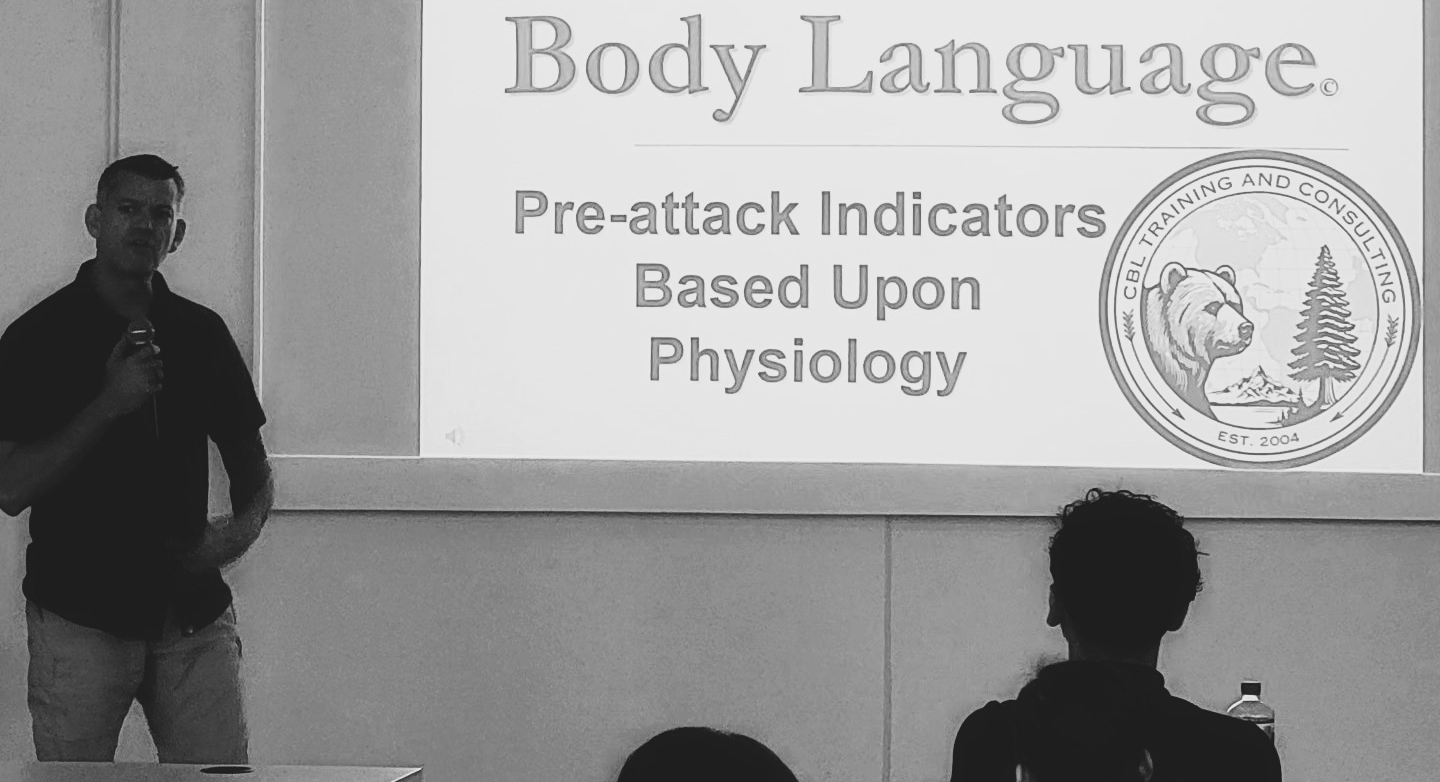
John Wilson spent 20 years as a California Highway Patrol officer and served as an Army Ranger. He knows what it costs to work in public safety — what it demands in the moment, and what it takes from you over a career. He knows what it looks like when stress wins. And he knows what it looks like when it doesn’t.
He built CBLTAC — Core Body Language Training & Consulting — because the tools he developed over two decades in law enforcement and military service are not widely available to the people who need them most. His mission is to change that.
This is his third event in East Texas. The first responders who trained with him before asked him to come back. The training works — and the people who do this job for a living know it.
“I wish I had had this training earlier in my career. It would have changed how I handled things — in the field and at home.”
— John Wilson, CHP · Army Ranger · CBLTACTyler, TX 75704
You Give Everything
On Every Shift.
This One’s for You.
Seats are limited. This is a small-group, instructor-led training. First Responder and Military Veteran discount applied at checkout — no code needed.
Friday, Apr 24
Saturday, Apr 25
Best Value — 50% Off
Discount verified at checkout. Valid ID or DD-214 may be required for in-person verification.
East Texas Krav Maga · 2918 E. Grande Blvd., Tyler TX 75707 · (903) 590-0085 · etxkravmaga.com
CBL Training & Consulting with John Wilson — First Responder Edition — April 24–25, 2026 — Tyler, Texas