
The Roots ofKrav Maga
From the streets of Bratislava to the Israel Defense Forces to training centers around the world — how one man’s survival forged the system we train today.
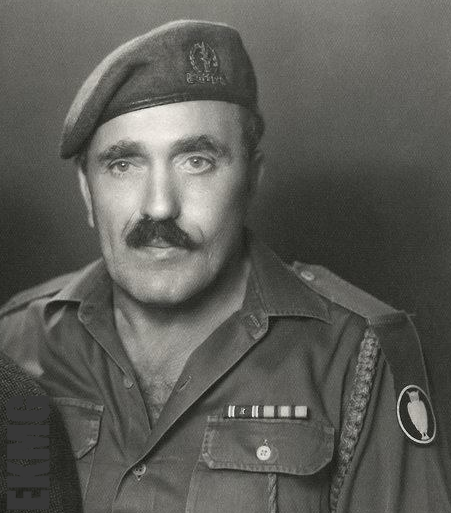
Imrich “Imi” Lichtenfeld was born in 1910 in Budapest, Hungary and raised in Bratislava, the capital of Slovakia. His father Samuel was a professional wrestler, weightlifter, and circus performer who later opened a wrestling club and joined the city police — eventually becoming the head of the detective unit.
As a child, Imi trained in wrestling and boxing. By the 1920s and 1930s he was one of the most well-known and successful European wrestlers in his weight category, winning several European competitions in both disciplines.
After the enactment of the Nuremberg laws and the rise of anti-Semitism across Europe, violence against Jews became rampant. Imi became the undeclared leader of a group of young Jews who actively prevented anti-Semitic rioters from entering Jewish neighborhoods and harming the population.
Through numerous violent clashes and street fights against anti-Semites, Imi became acutely aware of the fundamental difference between combat sports and real street violence. This distinction would become the foundation of everything Krav Maga would eventually become.
In 1940, Imi boarded the ship “Pancho” with a Paraguayan visa — ostensibly heading for South America. In reality, the ship was destined for illegal immigration to Palestine, which was under British mandate at the time. The Betar Movement, a Zionist youth organization, had arranged the voyage. The ship was originally supposed to carry 150 young people. It sailed with 500.
The Pancho was marooned off the Greek coast. Imi and four others rowed a lifeboat toward Palestine for five days before being detained by a British battleship and brought to Egypt. He joined the British army, served in the Czech brigade, and after being discharged in 1942 was finally allowed to enter Palestine.
Jewish settlements in Palestine suffered from frequent harassment by Arab gangs. Yitzhak Sade, head of the paramilitary organization Haganah — created to protect Jewish settlements — turned to Imi and asked him to train the organization’s special forces, Palmach and Palyam.
Because the British didn’t allow Jews to carry firearms, Imi developed offensive and defensive techniques utilizing bare hands and edged or blunt weapons. These techniques were collectively referred to as the “Kapap method” at the time — Krav Panim el Panim, meaning face-to-face combat.
With the formation of the State of Israel, Imi became part of the Israel Defense Forces and served as its main physical fitness and Krav Maga instructor. He adapted his method for military requirements — introducing techniques involving firearms — and trained the elite units of the IDF for 16 years.
By the time Imi left the IDF in 1964, his method had become an integral part of training in the Ministry of Education and all Israeli security forces.
After leaving the IDF, Imi opened training centers in Tel Aviv and Netanya and began adapting Krav Maga to fit civilian needs. During these years he trained the next generation of Krav Maga instructors who would later spread his teachings and establish their own organizations around the world.
Imi Lichtenfeld passed away in 1998. The system he built from necessity — on the streets, in the military, and in the training hall — lives on in every Krav Maga school worldwide.
Despite his incredible accomplishments, Imi was the exact opposite of the stereotypical muscle man: sensitive, humane, and attentive to those around him. A gentleman who respected others, strove for peaceful resolution, and avoided unjustified force. He was a spiritual teacher to his many followers — consulted in all matters, professional or personal.