Safety Template
Library.
Pre-built decision frameworks for the environments you move through every week. Use them today — no signup, no cost, no experience required.
Jump to the TemplatesA Pre-Made Decision.
Not a Plan You Make Under Pressure.
Decisions made under stress are worse than decisions made in advance. This is physiology, not opinion. When your nervous system is activated, real-time decision-making degrades — and the situations that require good decisions are exactly the situations that produce that degradation.
A safety template removes the decision from the moment entirely. You answer three questions for a specific environment before you ever need to. Then when something crosses your threshold, you are not deciding — you are executing something you already built.
This page gives you two things: a step-by-step guide to building your own templates for any environment, and five pre-built templates for the environments most people move through every week. Start with the pre-built ones. Build your own for everything else.
How to Build Your Own Template.
This system works for any environment you visit regularly. Five steps. Answer each one in writing — writing it installs it. You will recall a decision you wrote down far more reliably than one you thought about once and moved on from.
Pick one specific place you visit at least once a week. Not “parking lots in general” — your parking lot. The one at work. The one at your grocery store. Specificity is what makes the template retrievable under stress. A vague template covers everything and executes nothing.
What does normal look like here? Write it down. Who is usually here, what are they doing, what does the noise level feel like, how do people move? You cannot spot an anomaly until you know what right looks like. This step takes two minutes and makes every other step possible.
What specific anomaly would cross your line? This is the most important step. Not “something feels wrong” — that is not a threshold, it is a feeling. A threshold is a specific observable behavior that, when you see it, triggers your response. One anomaly is data. Two is a pattern. Three is your threshold.
When your threshold is crossed, what exactly do you do? Write the specific sequence. Where do you go? What do you say? What do you not do? The response must be specific enough that you can picture yourself executing it. If you cannot picture it clearly, write it again until you can.
After each time you’re in this environment, take 60 seconds. Did anything register as unusual? Did you miss a signal on the way in? Did your baseline hold or did something shift? This is your feedback loop. Awareness improves through review — not just through presence. The template that gets reviewed gets better.
Act on the signal — not the certainty. You will never be certain. Certainty arrives after contact, and by then the window for prevention has already closed. A pre-built decision removes the requirement for certainty. When your threshold is crossed, you act — because you already decided. The non-event is the goal. Nothing happens. You leave, nothing occurs, and you feel vaguely like you overreacted. That is the best possible outcome.
- What does normal look like here — right now, for this specific environment?
- What specific behavior or combination of behaviors crosses my threshold?
- What do I do — exactly, in sequence — when that threshold is crossed?
Your Starting Point.
Adapt These to Your Environments.
These five templates cover the environments most people move through every week. Use them as-is or adapt each one to your specific location. The goal is the same for all five: arrive with a pre-made decision, not a hope that you’ll figure it out when it matters.
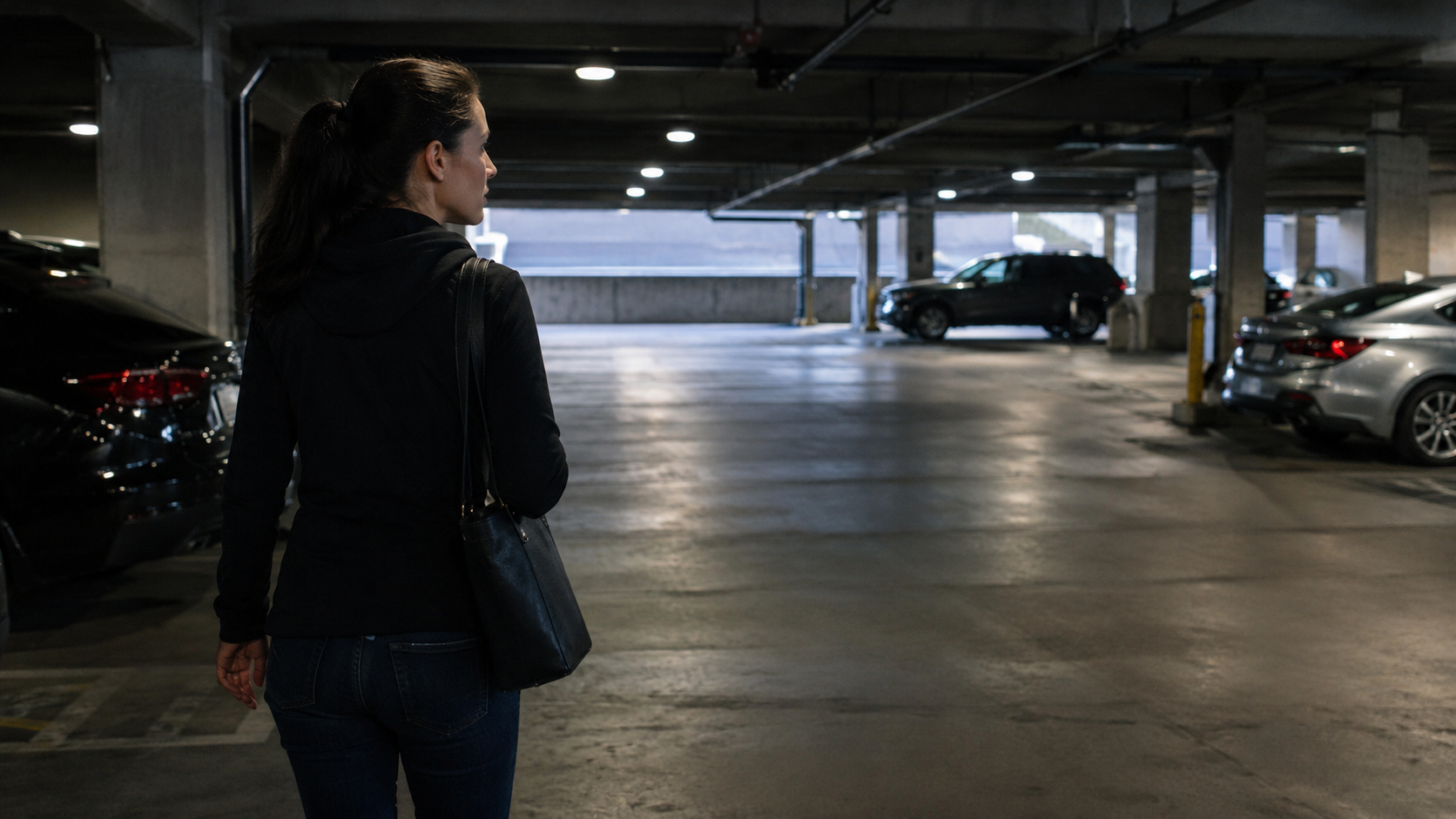
- People moving purposefully to and from vehicles
- Cars moving slowly through lanes
- No one lingering near vehicles without apparent reason
- Normal noise — doors, engines, carts
- Clear sightlines throughout the space
- Someone on foot not moving toward any vehicle
- A person near your car who wasn’t there when you parked
- Someone closing distance without an obvious destination
- An approach from behind or from a blind angle
- A request for help or engagement that feels off
- Stop moving toward your vehicle
- Change direction toward people, light, or a staffed area
- Phone out — call someone or appear to
- If approached: Stop. Back up. Loud and direct. Don’t explain
- Do not unlock your car until you are ready to enter immediately
- 1Before you exit the building: Phone in pocket. Scan the path to your car from inside before you step out. Identify your route and any people in it.
- 2Walking to your car: Head up, deliberate pace, brief eye contact with anyone nearby. Keys accessible but not swinging. Scan the area around your car as you approach — not just the car itself.
- 3At your car: Unlock only when you are ready to get in. Get in, lock the door, then check your phone or fix your bag. Don’t sit in an unlocked car with the door open.
- 4If something feels off: Turn around. Go back inside. Call someone. Drive away if you’re already in the car. You don’t owe anyone an explanation for choosing not to engage.

- Shoppers moving through aisles with carts or baskets
- Staff stocking shelves or working registers
- Steady ambient noise — carts, PA, checkout sounds
- People stopping to look at products, then moving on
- Consistent foot traffic through main aisles
- The same person appearing in multiple separate aisles
- Someone who appears to be watching you rather than shopping
- An unsolicited approach in an isolated area of the store
- A question or request that doesn’t match the context
- Being followed from the store to the parking lot
- Move toward the front of the store and more people
- Tell a staff member — you don’t need to explain fully
- Change your route through the store
- If followed to the lot: do not go to your car — go back inside
- If approached: Stop. Back up. Loud and direct
- 1Entering the store: Five-second scan at the entrance. Exits, staff positions, crowd density. This takes no extra time — you do it while you get your cart.
- 2In the aisles: Passive awareness of who is near you, especially in less-trafficked areas. If something registers as off — note it. One data point. Keep watching.
- 3If the same person appears twice: That is your second data point. Move toward more populated areas. Tell a staff member casually. You don’t need a dramatic scene — you need people around you.
- 4Leaving the store: Look before you step outside. Scan the path to your car. If the person of interest is near the exit or lot, go back in. Every store has a staff member who will walk you out.
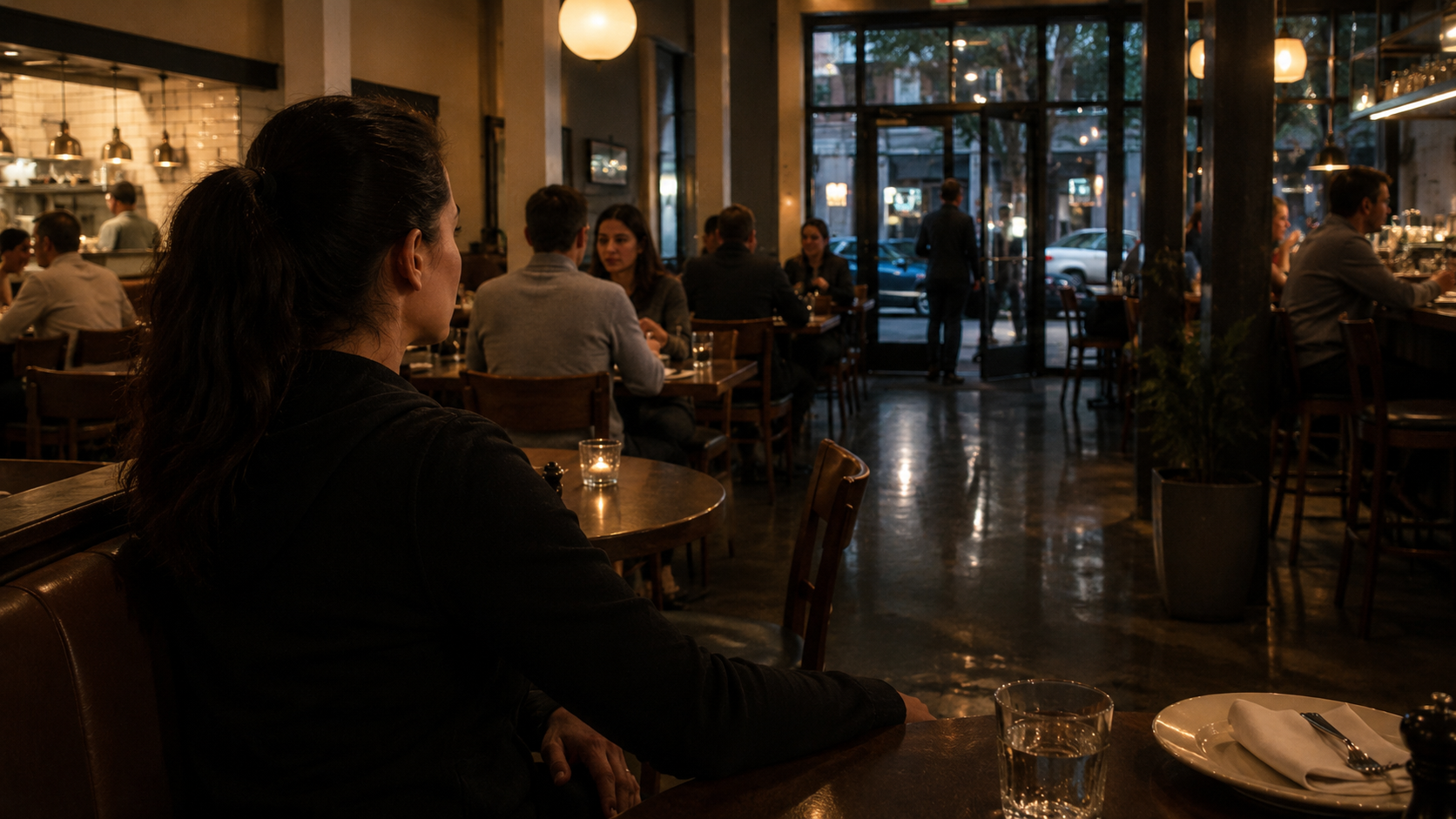
- Tables occupied with people eating or waiting
- Staff moving between kitchen and dining area
- Consistent noise — conversation, kitchen sounds, movement
- People entering and leaving through the front
- Predictable, purposeful movement throughout the space
- A rapid escalation in noise, shouting, or physical movement
- Staff behavior that shifts — urgent movement, back-of-house exit
- A person who enters and does not sit or order
- Someone near your table whose behavior doesn’t fit
- Any sudden crowd movement toward exits
- Move toward the kitchen or back exit — not the front door
- Stay low if the threat is at the entrance level
- Leave your belongings — they are not the priority
- Alert anyone with you with one word: Move
- Get outside and create distance before doing anything else
- 1When you’re seated: Choose a position facing the entrance. Back to a wall when possible. Identify the kitchen exit within 30 seconds of sitting down. A three-second decision that costs nothing.
- 2During your meal: Passive awareness. You are not watching for threats — you are simply not switching off. When someone enters, your eyes go to the door. That is the entire habit.
- 3If your threshold is crossed: You already know where the kitchen exit is. Say one word to anyone with you: Move. Go toward the back, not the front. The front door is where a threat enters.
- 4Once outside: Create distance, get to cover, call 911. Don’t re-enter. Don’t wait to confirm what happened. Leaving before anything locks in is always the right outcome.
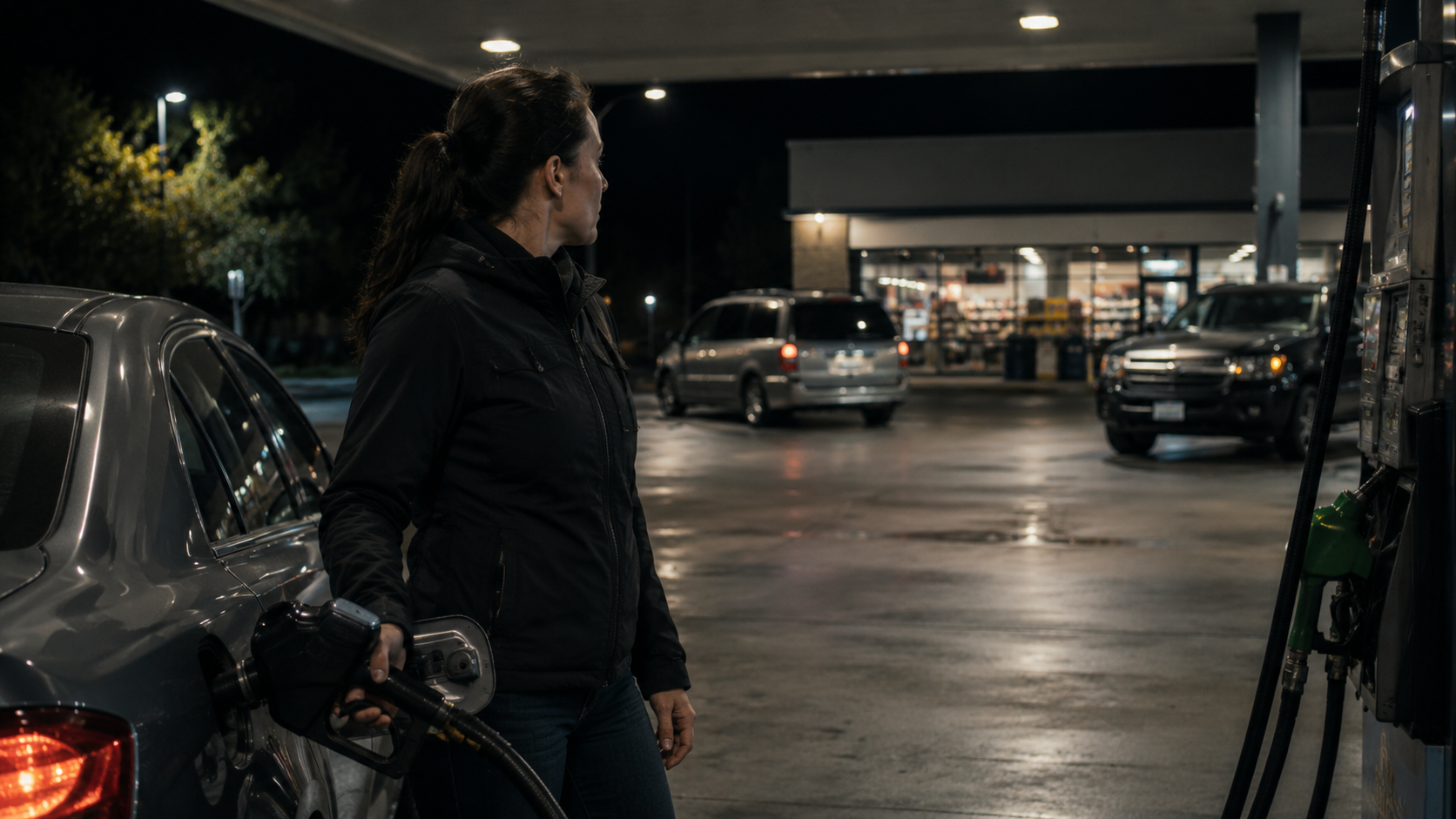
- People at pumps, focused on fueling
- Occasional person going in or out of the store
- Cars pulling in and out in a predictable pattern
- Staff visible inside the store
- Brief, transactional interactions — not extended stays
- Someone approaching your pump who isn’t fueling
- A person watching from a distance with no obvious purpose
- Being approached for money, directions, or any engagement
- A person between you and your car door
- A car that parks but no one gets out
- Stop the pump and get in your car immediately
- Lock the door before you do anything else
- Drive to the next station or a well-lit public place
- If already approached: Stop. Back up. Loud and direct. Then move
- Do not leave your car running while you go inside
- 1Pulling in: Choose a pump near the store entrance and under lights when possible. Note who else is on the forecourt before you get out of your car.
- 2At the pump: Phone in your pocket. Face out — not toward the pump. You can hear when the pump clicks off. You cannot hear someone approaching behind you.
- 3Going inside: Lock your car. Note who is inside the store and who is on the forecourt when you return. The walk back to your car is a transition — treat it that way.
- 4If your threshold is crossed: Stop the pump, get in your car, lock the door. Drive away if you need to. You can get gas somewhere else. The fuel is not worth the risk.
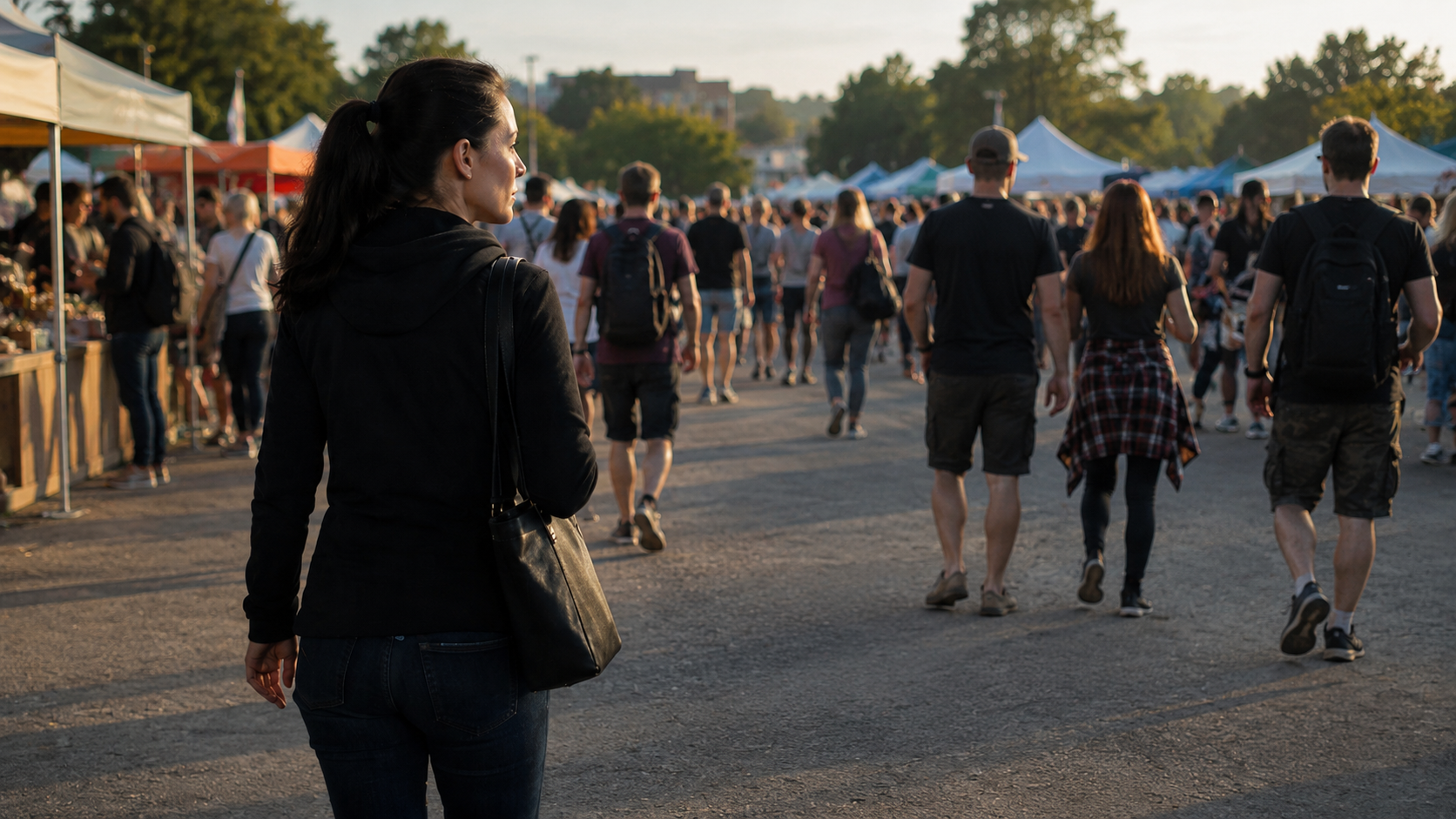
- High energy — lots of movement, noise, activity
- People focused on the event, not on other individuals
- Consistent crowd flow toward vendors, stages, exits
- Security or staff visible at entry points and perimeter
- Shared positive energy — people are engaged in the event
- A sudden crowd movement in one direction without explanation
- Screaming that is fear-based rather than excitement-based
- Crowd going still and quiet — especially near the entrance
- A sound that doesn’t belong — sharp, loud, not music
- Anyone moving urgently against the direction of the crowd
- Move immediately — don’t wait to confirm what you heard
- Move away from the sound or movement, not toward it
- Move toward the perimeter — not the main exits if crowded
- One word to anyone with you: Move. Keep moving
- If you can’t move: get low, get behind cover, stay down
- 1On arrival: Locate two exits before you go to your spot — not the main entrance you came through, and one other. Know where they are relative to where you’ll be. This takes 60 seconds.
- 2Positioning: Avoid the center of large crowds when possible. Perimeter positions give you exit options and visibility. If you must be in the center, know which direction the nearest exit is and hold that orientation.
- 3If something happens: Move before you know what it is. A sudden crowd movement, an unexpected loud sound, a shift in the energy of the space — those signals are enough. Act early and you have options. Wait for certainty and you may not.
- 4If you cannot exit: Move away from the threat direction. Get behind something solid. Get low. Stay down. Call 911 when it is safe — not before. Silence on a call is better than a sound that gives away your position.
Templates Build the Decision.
Training Builds the Response.
These templates close the awareness gap. What they cannot do is train your physical response under stress. That requires a live training environment, a qualified instructor, and repetition under pressure. One free trial lesson. No gear, no experience, no commitment.