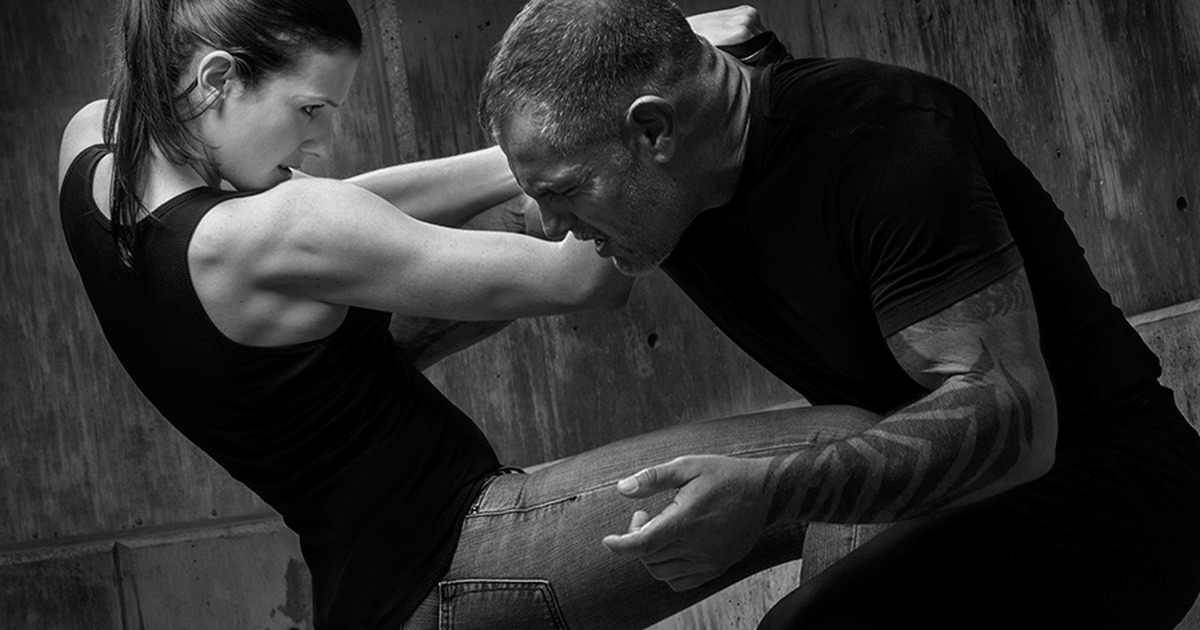
Picture a drill in class. Two people are coming at you from different angles. One is yelling. The other is moving fast. Your instructor doesn’t tell you what to do. Instead, she asks a question: “What do you see right now?”
Your brain has to shift. You can’t just throw a technique. You have to assess what’s actually happening, decide what matters most, and act on that decision before the situation changes.
That moment, the one where you stop reacting and start thinking, is what self-defense training actually develops. Not just physical skills. Thinking skills.
Why Your Instructor Asks Questions Instead of Giving Answers
Most fitness classes and martial arts programs follow a simple model. The instructor demonstrates. You copy. You repeat until the movement looks right.
Krav Maga works differently. At ETKM, instructors use questions as a primary teaching tool. After a drill, you won’t just hear “good job” or “do it again.” You’ll hear: What did you notice first? Where was your attention? What option did you choose, and why?
This is deliberate. When an instructor gives you the answer, you memorize it. When an instructor makes you find the answer, you own it.
That distinction matters under stress. Memorized answers break down when the situation doesn’t match the script. But a person who learned to assess, decide, and adapt can handle situations they’ve never rehearsed. That’s the difference between knowing techniques and knowing how to think.
This approach has roots in the Socratic method, the same question-based teaching used in law schools and medical training. The goal isn’t to test you. It’s to build the habit of thinking through problems before acting on them.
Scenario Training Forces Real Decisions
A punching drill teaches your body a movement. A scenario teaches your brain how to use it.
In scenario-based training, you don’t know what’s coming. The “attacker” might grab you, shove you, or just stand too close and refuse to move. Someone might yell from behind you. The lights might be off.
Your job isn’t to execute a perfect technique. Your job is to figure out what’s happening, decide what to do about it, and act under pressure.
This is where critical thinking gets built. Not in a classroom. On the mat, with your heart rate elevated and your attention narrowed by stress.
Your brain learns to sort information fast. What’s a real threat and what’s noise? What needs my attention right now and what can wait? Where are my exits? Who else is around?
Those questions don’t just apply in a self-defense situation. They show up when you walk into a room where something feels off. When you need to make a fast call at work. When your kid looks at you during a stressful moment and needs you to be steady.
The thinking patterns you build in training transfer because pressure is pressure. Your brain doesn’t distinguish between a drill scenario and a tense meeting. It runs the same assessment process either way.
Training from Disadvantage
Most training starts from a ready position. You’re standing, facing your partner, hands up, expecting the drill. That’s a necessary starting point for learning mechanics.
But real situations don’t start that way. You might be sitting in your car. Walking with grocery bags in both hands. On the ground after a shove you didn’t see coming. Exhausted from a long day.
At ETKM, we train from positions of disadvantage on purpose. You run drills when you’re tired. You work scenarios starting from seated positions, against walls, in confined spaces.
This builds something more important than physical toughness. It builds cognitive resilience, the ability to think clearly when conditions are working against you.
When you’ve trained your brain to solve problems while fatigued, startled, or off-balance, you develop a specific kind of composure. Not the absence of stress. The ability to function through it. That composure shows up in every area of your life where pressure is present and the stakes are real.
The Decision Habits That Stay With You
Self-defense training develops specific thinking habits that change how you process information outside the gym.
Assessment before action. You learn to read a situation before responding to it. In training, this means scanning your environment during a drill. Outside training, it means noticing the dynamics in a room before jumping to a conclusion.
Questioning assumptions. Instructors regularly challenge what students think they know. “You thought that was the threat. Was it?” That habit of checking your assumptions before acting on them changes how you make decisions. In conversations. In negotiations. In any situation where your first read might be wrong.
Staying in the problem. Under stress, most people want to escape the discomfort of uncertainty. They grab the first available answer and commit to it. Training teaches you to tolerate not knowing for a few more seconds, long enough to get better information before you act.
These aren’t personality traits. They’re skills. They develop through practice the same way any other skill develops. The mat is where you build them. The rest of your life is where you use them.
What This Looks Like at ETKM
Every class at East Texas Krav Maga is designed to develop your body and your brain at the same time.
You’ll learn practical self-defense skills that work under pressure. You’ll also learn how to assess a situation before you respond. How to make decisions when your stress response is pushing you to freeze. How to stay composed when conditions aren’t in your favor.
The instructors won’t just show you what to do. They’ll ask you questions that make you think about why. That questioning process is what separates trained responses from memorized ones.
Maybe you’re a parent who wants to think more clearly in stressful moments. Maybe you work in a high-pressure environment. Maybe you just want to feel more capable when life gets unpredictable. The thinking skills built in training serve you long after you leave the mat.
Start Training Your Brain
The ability to think clearly under pressure isn’t something you’re born with. It’s something you train.
Book your free trial class at East Texas Krav Maga and find out what happens when your brain gets the same training as your body.
Want to learn more first? Download our free guide: “What to Expect in Your First Self-Defense Class.”


