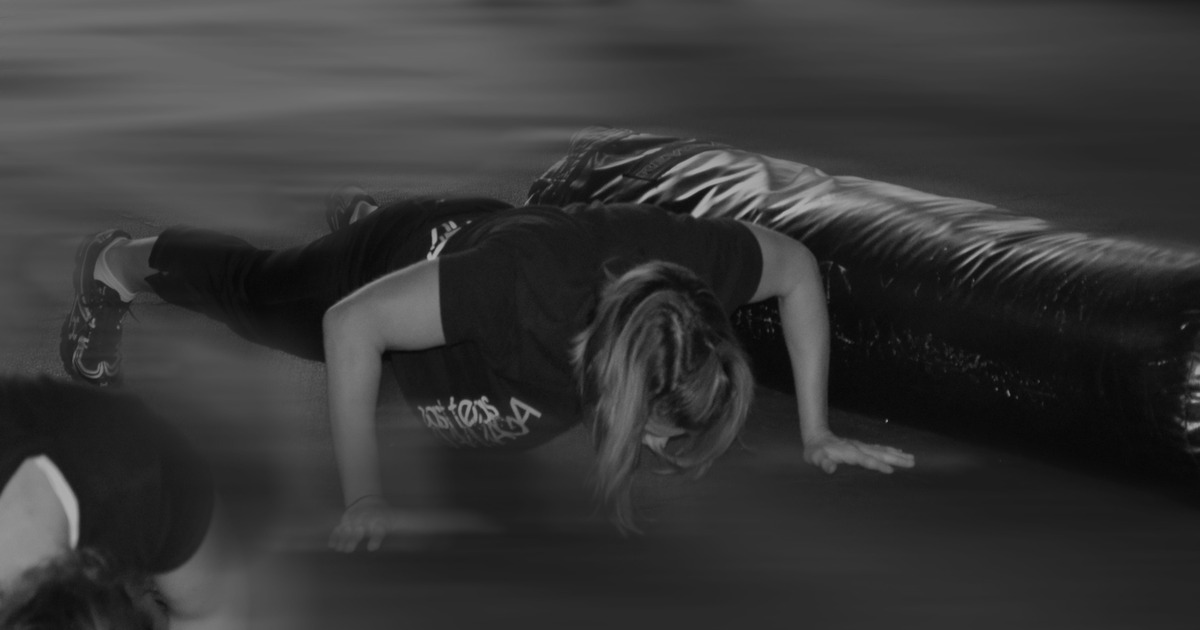
The first few weeks of training are about techniques. You learn how to strike, how to move off the line, how to create distance. Your brain is busy processing new information, and most of your energy goes toward getting the mechanics right.
But somewhere around the third or fourth month, something shifts. It’s hard to name at first. You’re not just learning new skills anymore. You’re starting to think differently about pressure, about fear, about what you’re actually capable of when things go wrong.
That shift is the most valuable thing training builds. And it’s available to anyone willing to put in the work.
Your Brain Under Pressure
When you train under stress over time, your brain rewires how it processes threats. Not in an abstract way. In a specific, measurable way.
Your heart rate climbs during a hard drill. Your hands shake. Your breathing gets shallow. Above 115 beats per minute, your fine motor skills start to degrade. Above 175, complex thinking becomes unreliable. Your body narrows its focus to what it thinks will keep you alive.
Early in training, that stress response shuts you down. You freeze, fumble, or default to whatever feels safe. Most people assume that’s a character problem. It’s not. It’s a training problem. And training problems have solutions.
Repetition under controlled stress teaches your nervous system a different pattern. Your body still responds to pressure. It always will. But your trained responses start running before your conscious mind catches up. Your hands move. Your feet shift. Your brain reads the situation and makes a call, all in the time it used to take you to freeze.
We call this building your autopilot. Every technique you drill under pressure writes a line of code for that system. The question isn’t whether your autopilot will take over when things get real. It will. The question is what program you gave it.
The Identity Underneath the Skills
The physical skills matter. But the deeper change is in how you see yourself.
Before training, most people carry a version of themselves that defaults to avoidance. Not because they lack courage. Because no one ever showed them another option. When pressure shows up, they hope someone else handles it, or they freeze and replay the moment for weeks afterward.
Training builds a different internal identity. Not through speeches or motivation. Through evidence.
You survived a drill that scared you. You stayed composed when a bigger training partner pressured you. You made a decision under stress and it worked. You got hit and kept going. Each of those moments deposits evidence into a mental account.
Over time, that account balance changes everything. You stop hoping you’ll be ready. You start knowing you are. Not because someone told you. Because you proved it to yourself, over and over, in conditions that tested you.
That shift doesn’t just show up on the mat. It shows up in how you walk through a parking lot. How you handle a tense conversation at work. How you respond when your kid is scared and looking to you for direction. The person you become in training is the person you carry everywhere.
How Training Builds This
This shift doesn’t happen by accident. It happens because training is designed to produce it.
At ETKM, we use a specific progression. You start with fundamentals in a controlled environment. Low stress. High repetition. Your body learns the movements before we add pressure.
Then we layer in stress. Fatigue. Distraction. Multiple attackers. Verbal commands you have to process while your body is working. Scenarios where you assess what’s happening and decide what to do before you act.
That stress isn’t punishment. It’s the environment your nervous system needs to build responses you can trust. A pilot who only practices landings in clear weather isn’t ready for a storm. Controlled pressure in training is the storm delivered safely.
We also use questions. Instead of just telling you what to do, instructors ask: What did you see? What decision did you make? Why did you choose that option over another? That process forces you to think through problems, not just memorize answers. It builds the mental layer that holds everything together when the physical skills are running on autopilot.
The Pre-Decision Advantage
One of the most powerful things training teaches you is how to make decisions before the pressure arrives.
Most people think self-defense decisions happen in the moment. They don’t. The people who respond well under stress already decided what they would do long before the situation showed up.
This is what we call pre-decision. It’s the practice of thinking through scenarios in advance and setting clear rules for yourself. If someone approaches me in a parking lot at night, I will create distance and get to a well-lit area. If I hear glass break downstairs, I will secure my family in one room and call 911. If a conversation starts escalating, I will disengage before it becomes physical.
Pre-decision works because it removes improvised judgment from high-stress moments. When your heart rate is spiking and your hands are shaking, you don’t want to be figuring out a plan for the first time. You want to run one you already built.
Training makes this automatic. The more scenarios you work through on the mat, the more pre-built responses you carry into daily life. You stop being surprised by pressure. You start recognizing it early and responding from a plan.
What You Can Do Today
You don’t have to wait for a crisis to start building this shift. Three practices that start working immediately.
Name what’s in front of you. Before you react to pressure, take one second to name what you’re actually dealing with. “This is a timing problem.” “This person is upset, not dangerous.” “I’m tired, not in trouble.” Naming the situation puts your thinking brain back in charge. It keeps your stress response from running the show.
Build a reset. Find one physical action that brings you back to center when stress climbs. A slow exhale. Resetting your stance. Dropping your shoulders. Practice it daily until it’s automatic. When your heart rate spikes, that reset buys you the two seconds between reacting and responding.
Stack your evidence. After every training session, name one thing you did that surprised you. One moment where you stayed composed, made a good decision, or pushed past hesitation. Write it down if you need to. That evidence compounds. Six months of stacking it changes how you carry yourself everywhere.
The Shift Is Waiting
The version of you that stays calm under pressure, reads a situation clearly, and acts instead of freezing. That version isn’t something you find. It’s something you build.
It takes time. It takes reps. It takes showing up when the work isn’t easy. But everyone who trains long enough reaches the same conclusion: the skills matter, but the person you become matters more.
You already have what it takes. Training is how you prove it to yourself.
Book your free trial class at East Texas Krav Maga and find out what changes when you start.
Not ready to step on the mat yet? Download our free guide: “What to Expect in Your First Self-Defense Class.”


