Part 2 of the Empowering Teens with Krav Maga Series
You have probably felt it yourself. A moment where your mind went completely blank. A test you studied for, a conversation you rehearsed, a situation where you knew what to do but could not make yourself do it.
Now picture your teen in a real emergency. Someone grabs them. A crowd turns hostile. A friend collapses. Would they act, or would they freeze?
Most people freeze. Not because they are weak or unprepared in character, but because the brain has a predictable failure pattern under sudden stress. The good news is that pattern can be trained out. That is exactly what Krav Maga does.
Why the Brain Freezes
When faced with sudden danger, the brain shifts into survival mode. Dave Grossman, the combat psychology researcher who wrote On Combat, documented what happens to the body as heart rate climbs under stress. Fine motor skills start to degrade above 115 beats per minute. Above 175, complex motor skills and cognitive processing become unreliable. Tunnel vision sets in. Hearing drops out. Decision-making slows to a crawl.
Amanda Ripley, in The Unthinkable, found something even more striking: research on building evacuations consistently shows that most people wait two to eight minutes after a fire alarm before they start to move, even when they believe the alarm is real. The brain’s first job in a crisis is not escape. It is explanation. People freeze because they are trying to make reality make sense, and reality is not cooperating.
Laurence Gonzales put it simply in Deep Survival: “Choking is about thinking too much. Panic is about thinking too little.”
The answer to both is the same: training that closes the gap between recognition and response before a crisis ever arrives.
How Krav Maga Trains Teens to Decide and Act
Simulated high-stress situations. Your teen does not just learn techniques in class. They practice them under controlled pressure that mimics real-world stress. In a multiple-attacker drill, the student must assess several threats at once, decide who to deal with first, and find an exit rather than trying to fight everyone. The drill is not about winning. It is about processing information fast and choosing the best option available.
Decisions with limited information. In a real situation, you will not have all the answers. In the “unknown threat” drill, a partner suddenly grabs, shoves, or corners the student with no warning. The student must react immediately, deciding between creating distance, de-escalating verbally, or defending physically. There is no time to think it through perfectly. They learn to trust their judgment and move.
Breath control under pressure. This is one of the most overlooked skills in self-defense. In panic mode, people hold their breath, hyperventilate, or lose focus from oxygen depletion. Grossman’s research shows that controlled breathing can bring the thinking brain back online even at elevated heart rates. In class, teens practice regulating their breathing during high-intensity drills, recovering between short bursts of effort, and using verbal commands while under physical stress. Speaking while stressed forces the brain to stay engaged instead of shutting down.
Grossman summarized the principle that drives all of this: “You don’t rise to the occasion. You default to your training.”
A Teen Who Did Not Freeze
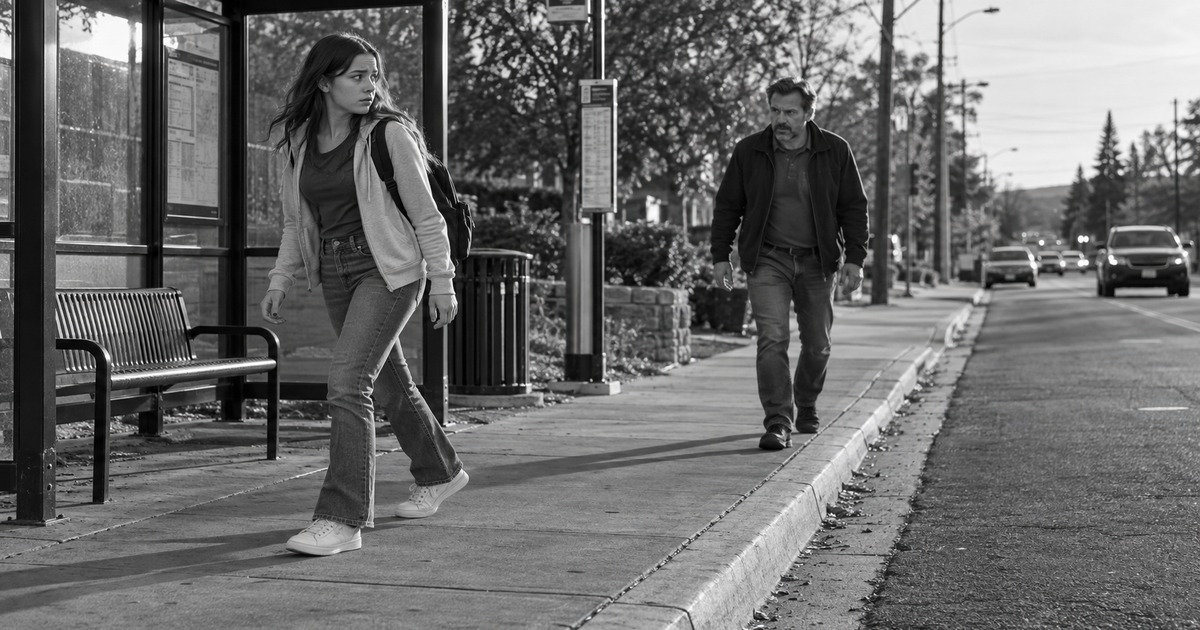
A 16-year-old Krav Maga student was waiting at a bus stop when an older man approached her aggressively. Instead of freezing, she created distance and positioned herself near the street where other people could see her. She made direct eye contact and projected confidence. When he kept coming, she told him loudly and clearly to back off. Her voice drew attention from nearby adults, and the man walked away.
She did not throw a punch. She did not need to. Because she had trained for stressful encounters, her brain defaulted to a response pattern instead of locking up.
How You Can Build This at Home
Decision-making under stress is not limited to self-defense situations. It applies to peer pressure, emergencies, social confrontations, and every moment where your teen has to choose quickly without perfect information. Here are three ways to start building this skill at home.
“What would you do?” conversations. Talk through real scenarios with your teen. What if someone follows you home? What if a friend is pressured at a party? What if you see an accident? The goal is not to scare them. It is to give their brain a pre-loaded response so they do not have to build one from scratch in the moment.
Controlled stress exposure. Gradually increase the difficulty of everyday decisions. Let them order their own food, ask a stranger for help, or make a choice under a time constraint. Small doses of manageable stress teach the brain that discomfort is not danger.
Training under pressure. The most direct way to prepare for stress is to experience it in a controlled setting. Krav Maga is built on repetition under pressure so that the response becomes automatic. When the brain has been through a scenario dozens of times in training, it stops treating the real version as unfamiliar.
Preparation Beats Panic
In a dangerous or high-pressure moment, the difference between freezing and acting is not courage. It is preparation. Training teaches your teen to stay calm, assess what is happening, and take action, whether that means avoiding a threat, setting a boundary, or helping someone in trouble.
This is Part 2 of our Empowering Teens series. Next: The Self-Defense Skills Every Teen Should Have Before They Need Them.
Schedule a free trial class and give your teen the training that turns freeze into action.


