Part 1 of the Empowering Teens with Krav Maga Series
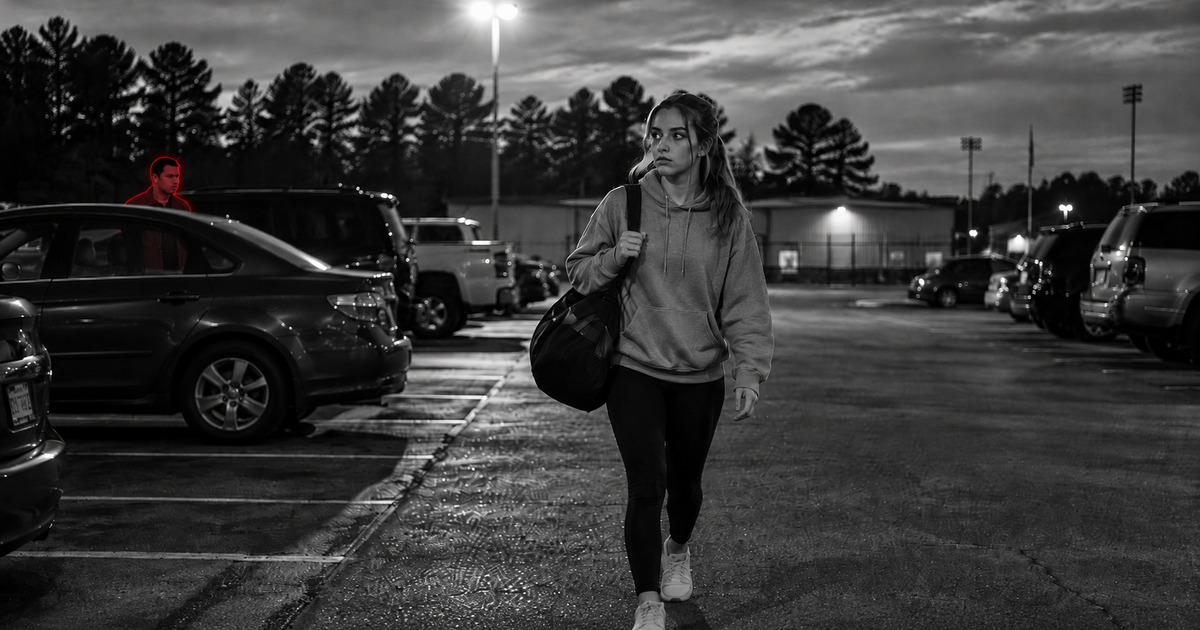
Picture your teen walking through a parking lot after practice, scrolling on their phone, earbuds in, completely unaware of who is around them or where the nearest exit is.
Now picture them head up, phone in their pocket, scanning the lot as they walk, noting the van parked next to their car and the person sitting in the driver’s seat two rows over.
Same teen. Same parking lot. Completely different level of safety.
That difference is situational awareness. It is not paranoia. It is not living in fear. It is a trained habit of paying attention, reading your environment, and making smart decisions before a situation turns dangerous.
And it is trainable. As Patrick Van Horne writes in Left of Bang, “Threat detection is a skill, not a personality trait, not a gift, not luck.” Your teen can learn it the same way they learn algebra or a jump shot. Through practice.
What Situational Awareness Actually Looks Like
Situational awareness is the ability to observe what is happening around you, recognize when something is off, predict what could happen next, and act on that information early enough to matter.
Most people move through their day distracted. Texting while walking through a parking lot, listening to music while waiting at a bus stop, scrolling while sitting alone in a restaurant. Research on attention shows that phone distraction in transitional spaces like parking lots, ATMs, and building entrances is the single highest-value target selection factor in opportunistic crimes. You are not just distracted. You are advertising availability.
For teens, this skill matters most in the places they go every day: parking lots, school hallways, stores, bus stops, and social gatherings.
How Krav Maga Builds This Skill
In training, your teen practices awareness as part of every class, not as a separate lesson. It becomes automatic. Here is how.
Scanning their environment. Students practice a simple 5-second scan every time they enter a new space: exits, crowd mood, tight spaces, staff, barriers. Five focal points. Five seconds. In partner drills, students call out at least three details about their surroundings before responding to a simulated attack. The consistent scan you actually do every time is worth more than the perfect scan you skip.
Recognizing pre-attack indicators. Most dangerous situations do not come out of nowhere. There are warning signs. Your teen learns to recognize someone following too closely, a person watching them but pretending not to, someone using conversation to close distance, or an individual whose movement pattern does not match everyone else’s. Gavin de Becker’s research shows that victims of violence almost universally reported pre-incident warning signals they chose to ignore, rationalize, or suppress. The body knew. The mind overrode it. Training teaches teens to stop overriding that signal.
Responding proactively. Most people only react when danger is already happening. Trained teens take action early. They cross the street to avoid a suspicious person. They position themselves near an exit in a crowded space. They create distance instead of waiting to see what happens. They use their voice to set a boundary before a situation escalates.
A Story That Shows What This Looks Like
A teenage girl noticed a man circling a parking lot slowly in his car while she was heading toward her vehicle. Instead of walking straight to her car, where she could be cornered between vehicles, she turned around, walked back into the store, and asked security to walk her out. The man drove off.
She did not fight anyone. She did not need to. She read the situation early and made a decision that kept her safe. That is situational awareness at work.
Drills You Can Practice at Home
You do not need a gym to start building this skill with your teen. Try these three exercises.
The “What If?” Game. While you are out together, ask: “If something happened right now, where are the exits?” or “If someone approached you here, what would you do?” or “Where is the safest place to stand?” This builds the habit of pre-planning before a situation requires it.
The Observation Challenge. When you walk into a restaurant or store together, have your teen identify three exits, notice anyone who seems out of place, and describe five details about the layout. Make it a quick exercise, not a lecture.
The Phone-Down Walk. Next time you walk through a parking lot together, both of you put your phones away. Walk with your head up. Notice what you see that you would have missed. One walk like this teaches more than any conversation about awareness.
Building the Habit
The key to strong situational awareness is consistency, not intensity. Help your teen build the habit by limiting distractions in transitional spaces, encouraging them to trust their gut when something feels off, and practicing awareness as a family. When scanning the environment becomes routine, it stops feeling like work and starts feeling like a natural part of how they move through the world.
Your teen does not have to be afraid of the world. They just need to see it clearly. When they can spot trouble before it arrives, they avoid danger, make better decisions, and carry themselves with the kind of quiet confidence that comes from knowing they are paying attention.
This is Part 1 of our Empowering Teens series. Next: Decision-Making Under Stress, where we cover why the brain freezes and how training rewires that response.
Schedule a free trial class and let your teen start building awareness that lasts.


