Reverse Engineering Self Defense Blog Series: 1 of 8
A woman walks to her car after a late shift. The parking lot is mostly empty. She is looking at her phone, scrolling through messages, keys somewhere at the bottom of her bag. She does not notice the man who has been sitting in a parked car watching the lot for twenty minutes. She does not notice that he starts walking when she does, or that his path angles toward hers. She does not notice any of this because no one ever taught her what to look for.
Most people think of self-defense as what you do after someone grabs you. But the truth is, the most effective self-defense happens before anyone touches you. It happens in the seconds when you notice something is wrong and make a small, quiet decision that changes everything.
That is what preparation actually looks like. Not paranoia. Not living on edge. Just knowing what normal looks like so you can spot what is not.
What “Normal” Looks Like and Why It Matters
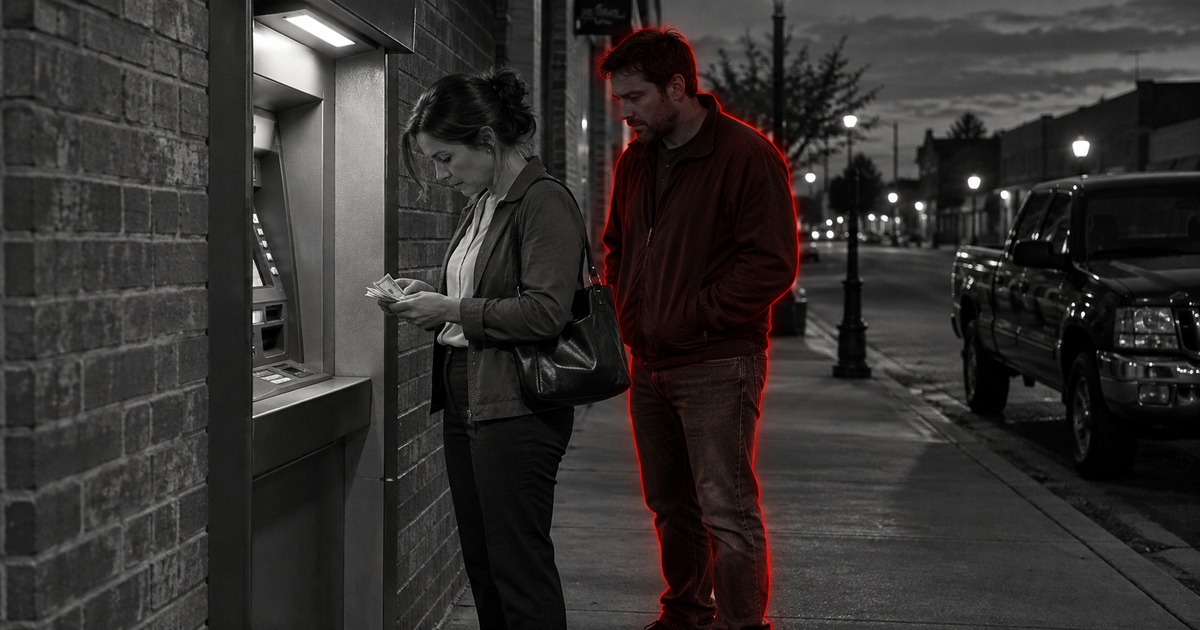
Every space you walk into has a baseline. The noise level in a coffee shop. The pace of foot traffic in a parking garage. The spacing between people at an ATM. When you walk into a room and something feels off, that feeling is data. Your brain detected an anomaly. Something did not match the pattern.
The problem is, most people dismiss that feeling. They tell themselves they are overreacting. They do not want to seem paranoid or rude. So they keep walking, keep scrolling, keep ignoring the information their brain is trying to give them.
Training in self-defense teaches you to trust that information. Not to panic, but to update your plan. One thing out of place is worth noting. Two unrelated things out of place is a pattern. That is your signal to create distance, move toward other people, or leave entirely.
This is a skill you can practice anywhere. The next time you walk into a restaurant, a gas station, or a grocery store, take thirty seconds. Notice who is there, where the exits are, and what the normal rhythm of the space feels like. That thirty-second scan is not paranoia. It is the most basic form of personal safety, and it costs you nothing.
Reading the Room Before You Have To Fight It
Danger does not usually appear out of nowhere. Predatory behavior follows patterns, and those patterns are visible if you know how to read them.
Someone loitering near an entrance without a clear purpose. A person whose attention is focused on you rather than on their own business. Forced proximity, where someone closes distance with you in a space where there is no reason to be close. A stranger who tests your boundaries with a question or request to see how you respond.
None of these are emergencies by themselves. But they are signals. And the people who get targeted are usually the ones who did not notice the signals or did not act on them.
Here is the critical shift: you do not need certainty to take protective action. You do not need to be sure something bad is about to happen. Change your route. Move toward a group of people. Step into a well-lit business. Early action is always low drama. Walk the other direction. Cross the street. Angle toward a store entrance. These are small moves that carry zero social cost and can prevent the situation from ever developing.
The fight you avoid is the fight you already won. Physical skills are the backup plan. Awareness and positioning come first.
Transitional Spaces: Where Most People Drop Their Guard
The highest-risk moments in your day are not in open spaces. They happen during transitions. Walking from your car to a building entrance. Stepping from a lobby into a stairwell. Moving through a parking structure. These moments concentrate you, slow you down, and create natural choke points.
Think about how you typically walk to your car. Are you looking around, or are you looking at your phone? Are you moving with purpose, or are you digging for keys while standing in the open? Do you scan the area around your vehicle before you reach it, or do you only look up when you are already at the door?
A simple habit change makes a real difference here. Before you step through any transition point, pause for two seconds and scan. Look at what is ahead of you. Check your peripheral space. Then move with intent. Not rushed, not distracted. Deliberate.
This is not about living in fear. A two-second scan is automatic once you practice it a few times. It becomes as natural as checking your mirrors before you change lanes. You do not think about it as a safety measure when you are driving. You just do it. The same thing works everywhere else.
Pre-Loading Your Decisions
Here is what most people do not understand about high-stress situations: your brain loses access to decisions it has not rehearsed. Under adrenaline, your heart rate climbs, your perception narrows, and the part of your brain responsible for creative problem-solving goes offline. You do not rise to the occasion. You fall to whatever you have already trained.
That applies to decisions, not just physical techniques. If you have never thought about what you would do if someone followed you in a parking lot, the moment it happens, you freeze. Not because you are weak. Because your brain has no file to pull from.
Decision pre-loading is the fix. It means making your rules now, in calm, so they are already loaded when you need them. “If someone closes distance on me in a parking lot, I move toward people or a staffed entrance.” “If someone tests my boundary with a question, I answer briefly without stopping and keep moving.” “If something feels wrong, I leave. I do not wait to be sure.”
These are not hypothetical exercises. They are mental reps. The same principle behind drilling a physical technique until it becomes automatic applies to your awareness and decision-making. A decision made in advance is always faster than one made under pressure.
What Preparation Actually Gives You
Preparation does not make you invincible. It does not guarantee a perfect outcome. What it gives you is options. Distance gives you reaction time. Exits give you escape routes. Visibility gives you witnesses. And pre-made decisions give you speed when speed matters most.
The threat’s goal is to close your options. Fix you in place. Limit your exits. Narrow your choices until only one remains. Your goal is the opposite: keep options open. Maintain spacing. Know where you are going before you step into a bottleneck. Act before the situation locks in.
You can start building this today. Not next week. Not after you sign up for a class. Today. Walk into the next room and notice the exits. Put your phone in your pocket in the parking lot. Sit facing the entrance the next time you eat out. These are small changes. They cost nothing. And they put you ahead of most people who never think about personal safety until they wish they had.
If you want to go further, train with people who teach this as a system, not a set of tips. At East Texas Krav Maga, we build awareness, decision-making, and physical response into one connected skill set. Your first step is a free trial class. Come see what real preparation looks like.
Schedule Your Free Trial Class at East Texas Krav Maga
Not ready to walk in yet? Download our free guide on situational awareness and start building these habits on your own.


