Your Mental Playbook for Four Common Threats
In Part 1 of this series, you learned why your brain locks up under threat. In Part 2, you got three decision templates that cut through the freeze. Now it is time to build the full playbook.
A template gives you a type of response. A playbook gives you the specific response, matched to a specific situation, decided before the situation ever happens.
Why You Need a Playbook
Here is the problem with “figuring it out in the moment.” Your brain cannot do it. Not because you are slow. Because stress shuts down the part of your brain that weighs options and builds plans on the fly. Under real pressure, you do not rise to the occasion. You fall to your training.
The fix is simple: pre-commit your responses to common threat cues before the moment arrives. If you have already decided what to do, the decision is loaded and ready. If you have not, you get confusion. And confusion is what gets people hurt.
A playbook removes confusion. You think through a scenario now, when you are calm. You assign yourself a set of actions. You rehearse them. When the scenario shows up for real, the decision has already been made.
This is how anyone who performs under extreme stress actually prepares. You can use the same method for the four most common threat scenarios civilians face.
Scenario 1: You Are Being Followed
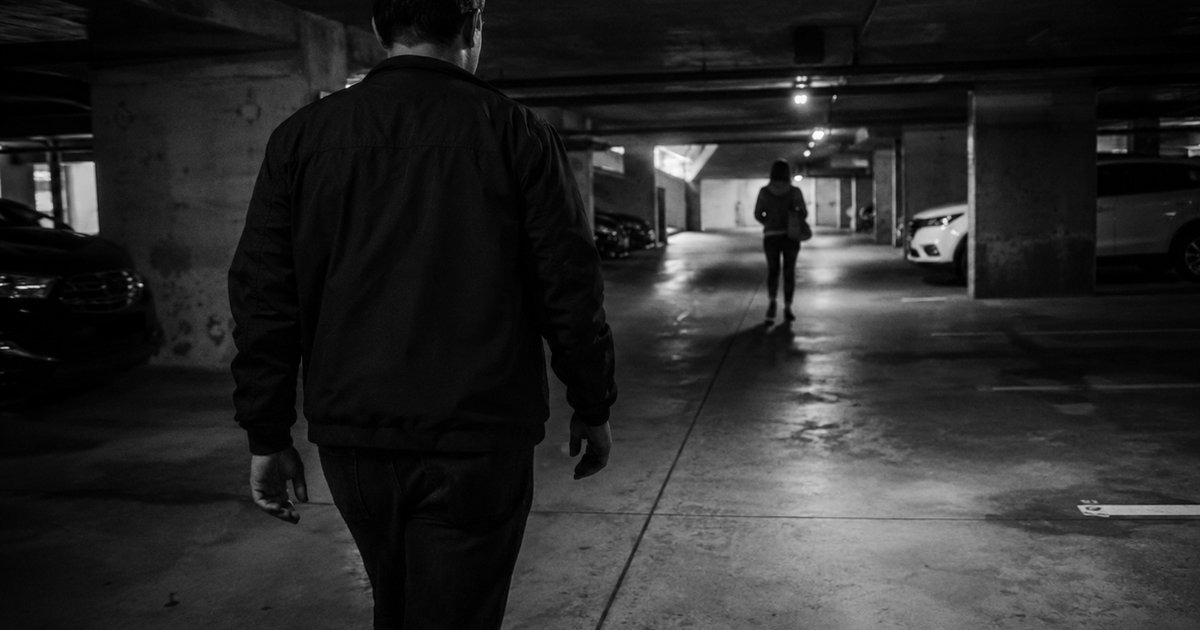
The situation. You are walking to your car after work. The parking lot is half empty. Someone behind you is matching your pace. You slow down, they slow down. You speed up, they speed up.
Your pre-loaded response:
- Change your route. Turn a corner or cross the street. If they mirror the change, you have confirmation.
- Move toward people. Head for a staffed business, a busy area, any location with good lighting. Do not go home. Do not go to your car in an isolated area.
- Get your phone ready. Call someone and tell them where you are. If the situation escalates, call 911.
- Do not confront. Your goal is distance and witnesses, not a conversation.
Your pre-load rule: “If someone matches two direction changes, I move to the nearest public space and call for help.”
Here is why this works: predictability is what predators buy with your routines. The curb to the car, the parking lot to the building entrance. Those transition points are where risk concentrates. A person who walks with their head up, varies their route, and moves with purpose gets passed over at the selection stage. A person with headphones in and eyes down gets tested.
Scenario 2: An Unexpected Confrontation
The situation. You are pumping gas, leaving a store, or sitting in your car. Someone approaches with aggressive body language or a strange request. They are closing distance.
Your pre-loaded response:
- Create space. Step back. Put an object between you if possible: your car door, a shopping cart, a gas pump.
- Use your command voice. Loud, clear, direct: “Stop. Stay back.” This is not a request. It is a boundary. Your words, your tone, and your body language all say the same thing.
- Scan for an exit. Where can you go? Where are other people?
- If they keep closing, move. Get to safety. Get to people.
Your pre-load rule: “If someone closes distance aggressively, I create space and use command voice.”
Your gut feeling becomes actionable the moment you can name the cue. Noticing that someone is closing distance, ignoring your verbal boundary, and watching your hands gives you specific data. Specific data leads to fast action.
Think about geometry. Three people forming a triangle around a single target in a parking lot. No words spoken. Just positioning. That is called a cue cluster. If you know what one looks like, you can act on it before it closes.
Scenario 3: A Home Invasion
The situation. You are home at night. You hear glass break or a door forced open. Someone is inside your house.
Your pre-loaded response:
- Do not investigate. Your job is not to clear the house. Your job is to protect yourself and your family.
- Get to your safe room. Pick the room now, before you need it. It should have a solid door, a lock, a phone, and ideally a second exit like a window.
- Call 911. Give your address, the situation, and your location inside the house. Stay on the line.
- If a safe room is not an option, get out. Back door, window, any exit. Get to a neighbor.
- If you cannot escape and cannot lock yourself in, prepare to defend the doorway. You know the layout. They do not.
Your pre-load rule: “If someone enters my home uninvited, I go to my safe room, lock the door, and call 911.”
Here is something most people skip: have you actually checked your safe room? Does the lock work? Is there a phone charger in that room? Do your kids know where to go? These details matter when you need them. They are invisible when you do not plan.
The non-event is the goal. The best outcome is boring. Nothing happens. Every bit of planning is aimed at that outcome. But if the non-event fails, the plan is already loaded.
Scenario 4: A Physical Assault
The situation. Someone grabs you, shoves you, or throws a punch. No warning, no buildup. You are in it.
Your pre-loaded response:
- Protect your head. Get your hands up.
- Create distance. Push off, move back, get space between you and them.
- Strike vulnerable areas if you cannot escape. Eyes, throat, groin. You are not trying to win a fight. You are creating an opening to get away.
- Run. The moment you have an opening, take it. Get to people, get to safety, call for help.
Your pre-load rule: “If someone puts hands on me, I protect my head, create distance, and run.”
This is what we call first action supremacy. The first moment after surprise is the moment that matters most. If your body has a trained response loaded, it fires. If not, you freeze. Better instincts can be built. Survival is not a personality trait. It is a practiced set of decisions.
How to Rehearse Your Playbook
You have four scenarios with specific responses. But reading them once is not enough. You need to rehearse them the same way you drill technique on the mat.
Mental rehearsal works because your brain processes a vividly imagined experience almost the same way it processes a real one. Your subconscious cannot tell the difference between a real experience and one imagined with emotional content.
Pick one scenario. Close your eyes. Put yourself in the setting: the parking lot, the gas station, your bedroom at 2 AM. Make it specific to your actual life, your actual routine, your actual home. Walk through your response step by step. Feel yourself moving. Hear yourself using your command voice. See yourself reaching safety.
Five minutes, twice a week. Rotate through all four scenarios. No special equipment. No extra time. Just focused mental drilling.
Keep Your Playbook Current
Your playbook changes when your life changes. New apartment means a new safe room and new escape routes. New job means a new parking lot and new transition points. New neighborhood means a new baseline.
Review your playbook when your circumstances shift. Walk through your new environment and update your responses. The plan that worked at your old place may not fit your new one.
What Comes Next
You now have the what: four specific playbooks for four common threats. In Part 4, we cover the how: how repetition turns these pre-loaded responses into automatic reactions that fire without conscious thought. Same principle your body uses when you drill a palm strike a thousand times. Same principle, different layer.
Ready to Build These Responses Into Your Body
Reading about playbooks is a good start. Training them on the mat is where they become automatic. Your first step is a free trial lesson.


