Article 5 of 7 in the Psychology of Combatives Series
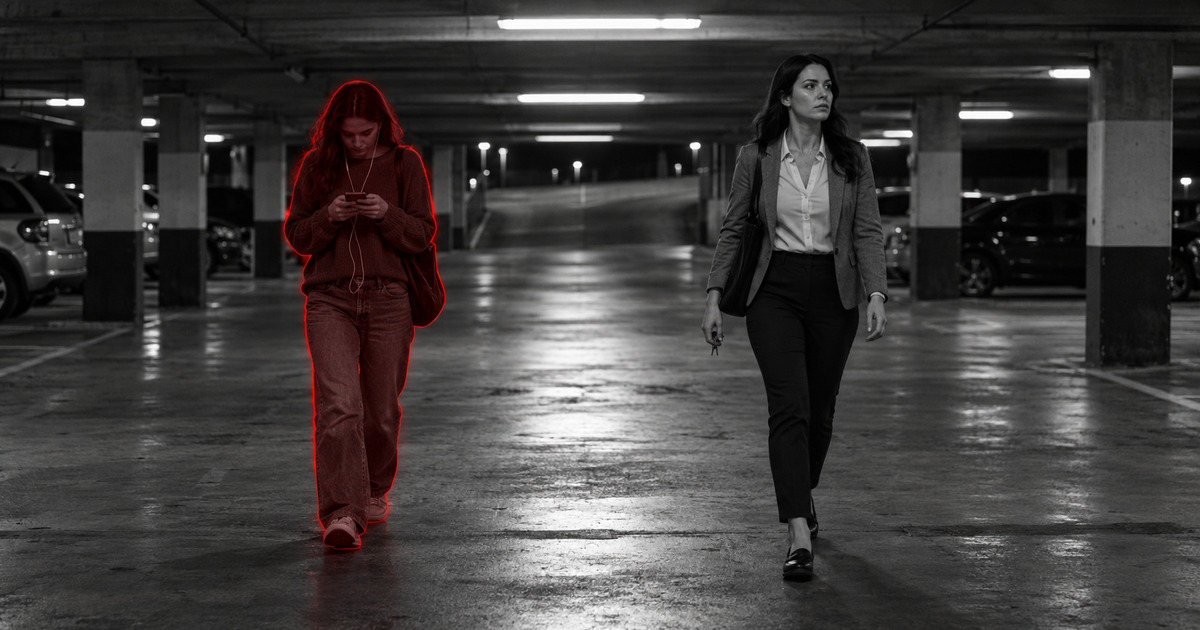
A woman walks through a parking garage. Head up. Stride deliberate. Eyes moving. She scans the space the way someone scans it when they’re paying attention. She looks like she knows where she is and where she’s going.
Another woman walks the same garage five minutes later. Phone out. Head down. Shuffling pace. Bag hanging open on one shoulder.
If a predator is watching both of them, only one of them looks like an opportunity. Neither woman threw a punch, said a word, or even knew they were being evaluated. But a decision was made based entirely on what their bodies communicated.
This is Article 5 in the Psychology of Combatives series. Where Article 3 covered reading your environment and communicating verbally, this one covers what your body says before you open your mouth.
Hard Targets and Soft Targets
People who commit violence against strangers don’t pick targets at random. They select. And the primary selection tool is body language.
Predators look for soft target indicators. Head down. Distracted. Uncertain movement. Shuffling gait. Posture that says “I’m not paying attention” or “I don’t want to be here.” These signals communicate vulnerability without a single word.
Hard target indicators communicate the opposite. Head up. Eyes scanning. Purposeful stride. Weight centered. Shoulders open rather than hunched. A person who looks like they would see you coming and respond.
This isn’t about looking tough. Nobody needs to walk around puffing their chest like they’re looking for a fight. That kind of display often creates confrontations rather than preventing them. Hard target presentation is about looking aware and deliberate. That’s it. A person who is present in the space they’re in.
The research on criminal target selection keeps returning to the same finding: attackers avoid people who look like they’ll be difficult. Not people who look big, strong, or aggressive. People who look ready. The bar is lower than most people think. You don’t have to project a threat. You just have to project attention.
Your Posture Doesn’t Just Reflect Your State. It Directs It.
Most people assume the chain runs one direction: you feel confident, so you stand tall. You feel anxious, so you hunch.
It runs both directions.
Research in combat psychology demonstrates that posture changes the emotional state it’s supposed to reflect. Stand upright, open your chest, lift your chin, and your nervous system responds. Cortisol drops. You feel more in control. Not because you decided to feel confident, but because you changed the input your brain was receiving from your body.
This is why the posture piece isn’t just a tip. It’s a tool. When you notice yourself shrinking in a situation that makes you uncomfortable, the physical correction is also a psychological correction. Shoulders back isn’t vanity. It’s a state management technique that works from the outside in.
This connects directly to Article 1 in this series, where we covered state management through breathing, self-talk, and mental rehearsal. Posture is another lever in the same system. Different entry point. Same result: staying functional when your brain wants to check out.
What to Practice
Body language isn’t something you fix once and forget. It’s a habit set. Like any habit, it runs on autopilot most of the time. The goal is to make your autopilot version look like someone who’s paying attention.
Three habits that change what people see when they look at you:
Head position in transitional spaces. Parking lots, ATMs, gas stations, building entrances. These are the locations where target selection happens most. Your phone goes in your pocket. Your head comes up. Your eyes move. One habit, practiced consistently, changes the entire picture a potential threat is reading.
Walking pace and gait. Hesitant, shuffling movement reads as uncertainty. A steady, deliberate stride reads as purpose. You don’t need to walk fast. You need to walk like you know where you’re going. If you catch yourself drifting or shuffling, reset. Pick up the pace slightly. Straighten your path. The change in how you move changes how you feel and how you’re perceived at the same time.
Eye contact. Not aggressive staring. Brief, direct acknowledgment. When someone enters your space, you look at them. Not at the ground, not past them, not at your phone. You register them. That single act communicates awareness. For someone looking for an easy target, awareness is the first thing that takes you off the list.
The Connection Most People Miss
Body language isn’t separate from the other skills in this series. It’s connected to all of them.
Article 1 covered managing your internal state. This article covered what your body broadcasts externally. Article 3 covered how to read a situation and respond verbally. Together, these form the pre-contact system: the layer of self-defense that works before anyone throws a punch.
The physical techniques you train at East Texas Krav Maga are your last resort, not your first. Your first resort is the way you carry yourself through a parking lot, the way you scan a room when you walk in, the way your posture communicates that you’re present and paying attention.
Most self-defense situations that were avoided never made the news. They ended before they started because someone looked like the wrong person to target.
Start your free trial class at East Texas Krav Maga. Train the physical skills and the awareness that determines whether you ever need them.


