Article 4 of 7 in the Psychology of Combatives Series
Before Blue Angels pilots ever climb into the cockpit, they fly the entire routine in their heads. Every formation change, every barrel roll, every emergency response. They sit together, eyes closed, and walk through it maneuver by maneuver. By the time they’re in the air at 400 miles per hour with six feet of separation, their brains have already been there hundreds of times.
Brain surgeons do the same thing. Before they pick up a scalpel, they mentally rehearse every step of the procedure. They visualize complications. They see themselves responding calmly to unexpected bleeding, unexpected anatomy, unexpected outcomes. When the real moment arrives, their hands move with confidence because their mind has already solved the problems.
Astronauts spend more time visualizing tasks than they spend performing them. Docking a spacecraft, repairing equipment during a spacewalk, executing emergency procedures in zero gravity. They rehearse mentally until the physical execution feels like something they’ve done before, even when it’s the first time.
The common thread across all three: the best performers don’t leave high-stakes performance to chance. They see themselves succeeding before they ever have to do it for real. And the science behind it explains why it works for self-defense the same way it works at 30,000 feet.
Why Visualization Works
This isn’t positive thinking. It’s neuroscience.
When you vividly imagine yourself performing a physical action, your brain activates the same neural pathways it uses during the actual movement. Not similar pathways. The same ones. Your muscles fire at low levels in the same sequence they would during real execution. Your brain processes the imagined scenario as a genuine experience and files it away as something you’ve done before.
That matters enormously under stress. When violence happens, your body defaults to what it knows. If it has only ever experienced a scenario in training, it has one set of references. If it has experienced that scenario in training and in hundreds of mental rehearsals, the references are deeper and the response is faster.
As Grossman writes: “You don’t rise to the occasion. You default to your training.” Visualization expands what counts as training. It multiplies the number of repetitions your brain has access to without requiring additional mat time.
This is why state management works better with visualization built in. Your brain doesn’t just know the technique. It has a stored experience of executing that technique under pressure, with emotional regulation already practiced as part of the rehearsal.
Four Visualization Techniques for Combat Readiness
These aren’t abstract exercises. They’re specific methods you can start using today. Each one builds a different layer of readiness.
Scenario-Based Visualization
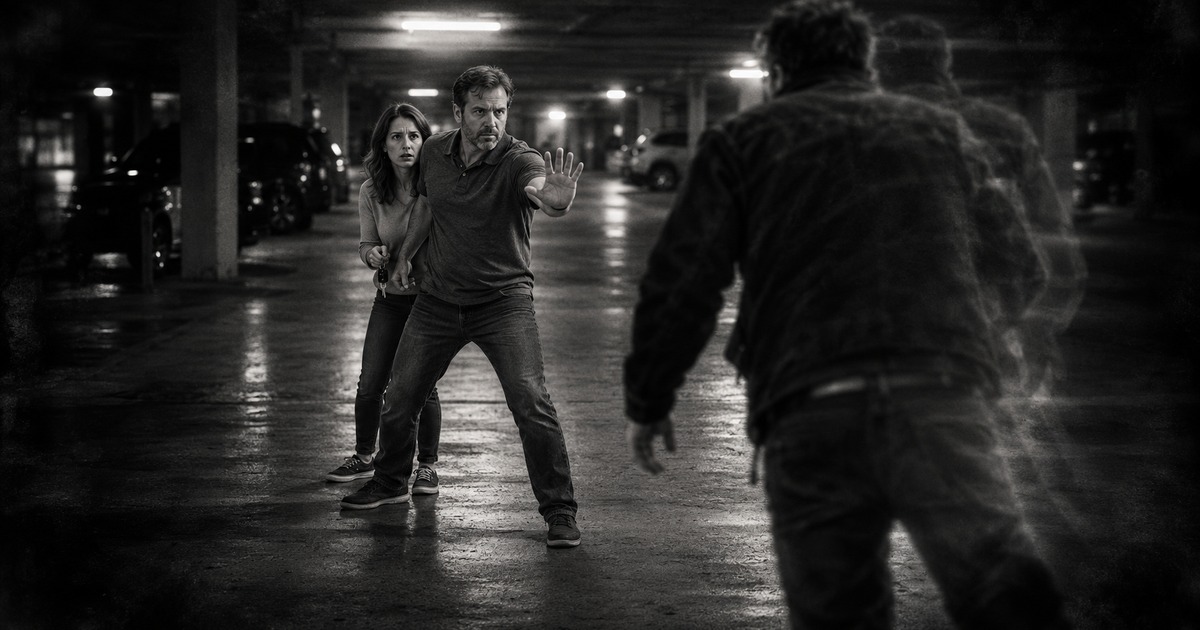
Pick a specific scenario. Not a vague “what if something happens” but a detailed situation. You’re walking to your car in a parking garage at 9 pm. You hear footsteps behind you. You turn and see someone closing distance with purpose.
Now fill in the details. What does the garage look like? What’s the lighting? Where’s the nearest exit? What is the person wearing? How fast are they moving? What’s your first action?
The more detailed the visualization, the more useful it is. Your brain needs specifics to build a usable reference. “Someone attacks me” gives your brain almost nothing to work with. “A person approaches from my left rear in a dimly lit parking structure while I’m carrying groceries in one hand” gives your brain a scenario it can actually process and file.
Action Rehearsal with Multiple Outcomes
Once you’ve established the scenario, mentally rehearse your response step by step. See yourself detecting the threat, creating distance, setting your position, issuing a verbal command, and responding physically if needed.
Then change the outcome. What if the person responds to your verbal command and backs off? What if they don’t? What if they produce a weapon? What if there’s a second person? Rehearse multiple branches of the scenario so your brain has responses for more than one outcome.
This is what makes visualization different from just thinking about a scenario. You’re not wondering what would happen. You’re practicing what you would do, across multiple possibilities, until the response patterns are stored.
Emotion and State Control
This is the layer most people skip, and it’s the most important one. During your visualization, don’t just see yourself moving. Feel the fear. Feel the adrenaline. Feel your heart rate climb. And then practice controlling it.
See yourself taking a tactical breath. See your internal voice saying “I’ve trained for this.” See yourself staying in Condition Orange instead of spiking to Red. Practice the emotional regulation as part of the rehearsal so it’s available during the real event.
If you only visualize yourself performing perfectly with no stress, you’re rehearsing a scenario that will never happen. Visualize the stress. Then visualize yourself managing it.
Perspective Switching
Practice visualizing the scenario from two perspectives. First person puts you inside the experience, seeing what you would see through your own eyes. This builds the most useful motor patterns and sensory references.
Third person puts you outside, watching yourself from a distance. This perspective is useful for refining strategy. You can see positioning mistakes, timing issues, and environmental details you might miss from inside the scenario.
Switch between both. First person for feeling and execution. Third person for analysis and improvement.
Putting It Into Practice: On the Mats, During Drills, Off the Mats
Visualization isn’t something you do once a week in a quiet room. It’s something you weave into three contexts.
On the Mats
Before class or a training session, take sixty seconds. Close your eyes. See yourself executing the techniques you’ll be practicing. See your footwork, your hands, your timing. See yourself performing with control and confidence, even when the drill gets intense.
This primes your neural pathways before the physical work begins. Your brain arrives on the mats having already rehearsed what you’re about to do. The physical reps go in deeper because the mental preparation has already opened the channel.
During Drills
As you train, layer in real-world context. The technique you’re drilling in class is happening in a gym, under fluorescent lights, with a partner wearing pads. In your mind, shift the location. You’re in a parking lot. You’re in a stairwell. You’re at a gas station with your family in the car.
This doesn’t require stopping the drill. It’s a mental overlay. You perform the physical technique while your mind places you in the scenario where you’d actually need it. Over time, this bridges the gap between training and application. Your body knows the technique. Your brain knows where and when to use it.
Off the Mats
This is where most of your visualization practice should happen, because this is where most of your time is spent.
Walking to your car. Standing in line at a store. Sitting in a restaurant. Take a few seconds to scan the environment and run a mental scenario. What would you do if someone came through that door right now? Where would you move? Where are the exits? What would you do with your kids?
You can also use visualization to reprocess past experiences. If you’ve been in a situation where you felt unsafe or froze, replay it in your mind and rehearse a different response. This doesn’t erase the original experience, but it gives your brain an alternative response pattern for the next time. Instead of defaulting to the freeze, your brain has a trained option.
Building the Habit
Visualization gets powerful when it becomes consistent. Five to ten minutes a day is enough to change how your brain responds under pressure.
Use sensory detail. Don’t just see the scenario. Hear it. Feel the ground under your feet. Feel your heart rate. Smell the environment. The more senses you engage, the more real the rehearsal is to your brain.
Vary the scenarios. Don’t rehearse the same parking garage encounter every time. Vary the location, the number of threats, the time of day, whether you’re alone or with family. Give your brain a range of references to draw from.
Include failure. This matters. Visualize scenarios where your first response doesn’t work and you have to adapt. See the technique fail and see yourself adjusting. This builds resilience and flexibility, not just confidence in a perfect outcome.
Where This Series Goes From Here
This is Article 4 in the Psychology of Combatives series. The first three articles covered combative psychology fundamentals, building a combative mindset, and the physiology of violence. Later articles address body language, situational awareness, and accelerated learning.
Each of these mental skills reinforces the others. Visualization makes state management more effective. State management makes physical technique more accessible under stress. The mental and physical sides of your training aren’t separate tracks. They’re one system.
You already have the ability to see yourself succeeding. You do it every time you worry about something going wrong. The only difference is direction. Worry rehearses failure. Visualization rehearses success. Same brain. Same neural pathways. Different input.
Start your free trial class at East Texas Krav Maga and learn how to train your mind and body as one system.
Want to start building your mental training before you walk in? Download our free guide to building confidence through self-defense training.
The people who perform best under pressure aren’t the ones who got lucky. They’re the ones who already saw themselves succeeding. You can train that.


