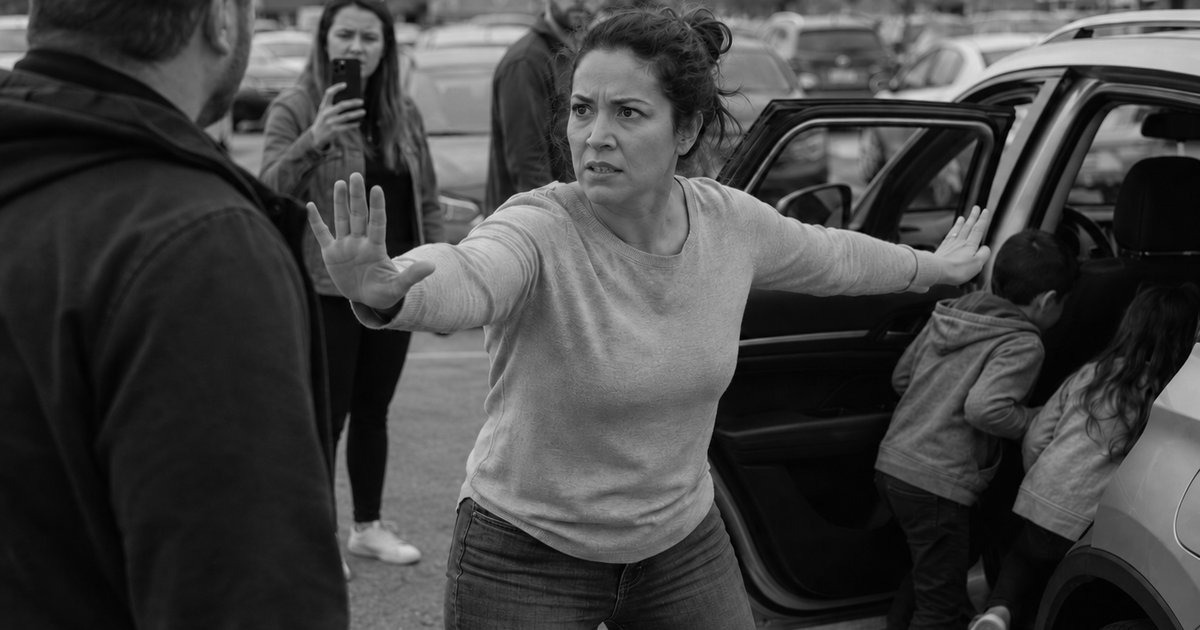
This is Part 1 of the Tier 1 Civilian series. The series is built around four questions from Lee Morrison that challenge you to honestly assess your readiness.
Here is a question worth sitting with.
If you had the motivation to become as effective as possible at protecting yourself and the people you love, how far could you go?
Not how far could you imagine going. Not how confident could you feel. How effective could you actually become?
Lee Morrison asks this question as the starting point for everything that follows. Morrison is a self-protection instructor whose Tier 1 Civilian framework has shaped how we think about readiness at ETKM. The question sounds simple. It is not.
Because most people answer with a feeling. “I think I could handle myself.” “I’d probably be okay.” “I took a class a few years ago.”
Those answers feel reasonable until you test them. And for most people, the first real test comes at the worst possible time.
An Honest Audit
Try this exercise. Sit down somewhere quiet and make an honest list. Not what you wish you could do. Not what you think you should be able to do. What you can actually do right now.
If someone grabbed your wrist in a parking lot, could you break free? If a stranger blocked your path to the door, would you know how to create distance? If your child was next to you when something went wrong, do you have a plan beyond “figure it out in the moment”?
Most people who try this exercise end up staring at a shorter list than they expected. That is not failure. That is information. And information is where real training begins.
Varg Freeborn writes that this kind of honesty is “a cheque to one’s own ego, and the account it checks is your training.” The point is not to make you feel bad. The point is to give you a starting position that is real instead of imagined.
The Gap Between Belief and Capability
Freeborn describes a pattern in his book Violence of Mind that every self-defense instructor has seen. The training collector: someone with hundreds or even thousands of hours of training who has never run a single skill to a defined standard. They have confidence. What they do not have is validation.
The distance between what this person believes they can do and what they have actually proven they can do stays invisible. It hides behind attendance records, certificates on the wall, and the comfortable feeling of having put in the time. That gap stays hidden until a real moment exposes it. And real moments do not offer second attempts.
This is not a character problem. It is a training design problem. If you have only practiced in a controlled setting with compliant partners, you do not know whether those skills survive stress. You have a rehearsal. Not a tested capability.
At ETKM, we build training around this distinction. Every level of our curriculum starts with fundamentals. Not because fundamentals are easy, but because they are the only skills that hold up when your body changes under threat. When your heart rate spikes past 175 beats per minute, your fine motor skills disappear. Complex techniques fall apart. What remains is what you have practiced the most, under the most realistic conditions.
Dave Grossman, a leading researcher on the psychology of combat, said it plainly: you do not rise to the occasion. You default to your training.
That single idea should change how you think about every rep you do on the mat.
Why Motivation Alone Falls Short
Morrison puts motivation at the front of his question for a reason. Without it, nothing moves. You can live ten minutes from the best training facility in your area and never walk through the door.
But motivation without the right training creates a specific kind of danger. It produces false confidence. And false confidence, in a real situation, can get you hurt worse than no confidence at all.
Here is why. A person who knows they are not prepared tends to be cautious. They avoid dark parking lots. They stay alert. They do not take risks they cannot support. A person who believes they are prepared, but has never tested that belief, takes risks they cannot back up. They overestimate their reaction time. They underestimate how fast a real attack happens. They assume their training will show up because it felt good in class.
This is why the quality of your training matters as much as your willingness to show up. A class that leaves you tired is not the same as a class that teaches you to function under threat. Hands shaking. Vision narrowed to a tunnel. Less than two seconds to respond. That is a different kind of training.
What Honest Training Looks Like
If you have never been inside a Krav Maga gym, you might picture something from a movie. Flying kicks. Choreographed sequences. People breaking boards. None of that has anything to do with a real parking lot at 10 p.m.
ETKM does not train that way.
A typical class starts with awareness. You learn to scan a room before you settle into it. You learn what pre-attack behaviors look like so you can spot them early enough to leave. You learn that the best self-defense you will ever use is the one that keeps you out of the fight entirely.
Then you train your body. Palm strikes, elbows, knees, and clinch work. Gross motor movements that function when your fine motor skills are gone. You practice them at speed, under fatigue, against resistance. Not because suffering is the point, but because comfort is not the condition you will face in a real event.
Then you pressure-test. Scenario drills put you in situations where the answer is not obvious. Someone grabs you from behind. Two people close in from different angles. The lights drop. You are tired and your heart rate is elevated and you have to decide what to do right now. Not in theory. Right now.
This is where the gap between rehearsal and capability shows itself. And this is where real confidence begins to build.
What Shifts When You Answer Morrison’s Question Honestly
When you commit to honest training, a few things change. Not overnight. Over weeks and months.
Your awareness shifts first. You start noticing things you used to walk past. Exits when you enter a room. Hands instead of faces. The person whose movement pattern does not match everyone else’s. You are not living in fear. You have trained your attention to gather information that matters.
Your confidence changes next, and it feels different from what most people expect. It is not loud. It is not aggressive. It is the quiet certainty that comes from testing your skills under pressure and watching them hold. That kind of confidence does not need to prove anything. It sits there, steady, because it was earned on the mat.
Your sense of responsibility changes last, and it might be the most important shift. When you know you are capable, you start thinking differently about the people around you. Your children. Your spouse. The people in your community. The question moves from “could I protect myself” to “could I protect them.”
Morrison’s Tier 1 Civilian concept begins here. Not with a technique. Not with a rank. With an honest answer to an honest question about what you are willing to build.
Where to Start
You do not need to be in shape. You do not need martial arts experience. You do not need to know what Krav Maga is or whether you would be any good at it.
You need one thing: the willingness to find out where you actually stand.
At East Texas Krav Maga in Tyler, Texas, our training is built on what holds up under stress. It is grounded in the research of people like Grossman, Freeborn, and Morrison. And it starts with your first class.
Your Next Step
Schedule your free trial lesson at ETKM. No contracts. No pressure. Just a chance to see where you are and what you could build from here.
Schedule Your Free Trial Lesson
Not ready for the mat yet? Download our free guide to personal safety habits and start building your awareness today.
Next in the Tier 1 Civilian series: What Happens to Your Training When Adrenaline Hits?


