This is Part 3 of the Tier 1 Civilian series. Part 1 covered honest self-assessment. Part 2 covered what stress does to your body. This article asks whether your preparation has kept up with the life you are actually living.
Morrison’s third question is the one most people skip past too quickly.
Could dedicated study and training significantly improve your odds of protecting yourself, the people you love, and the people around you?
The honest answer for almost everyone is yes. But the harder question underneath it is this: are you doing anything about it? And is what you are doing matched to the life you are living right now?
Because your life has changed. Your environment is different than it was two years ago, five years ago, ten years ago. You may have kids now who were not there before. You may work in a different building, drive a different route, live in a different neighborhood. The places you spend time, the people you are responsible for, and the threats in your area have all shifted.
Has your preparation shifted with them?
Risk Is Mostly Design
Varg Freeborn makes a point in Violence of Mind that reframes how most people think about safety: risk is mostly design. Your schedule, your routes, and your environments do the majority of the protective work. Not your fighting ability. Not your gear. Your daily choices.
This is good news, because it means you do not need to be a trained fighter to start reducing your exposure right now. You can change when you go to the gas station. You can change where you park. You can change how you enter a building and where you sit once you are inside.
But it also means something harder. It means that if you have not thought about your daily patterns in terms of risk, you may be carrying more exposure than you realize. And the longer your routines go unexamined, the more predictable you become to anyone who might be watching.
Freeborn’s Risk Assessment Loop puts this into a repeatable process: Environment, Exposure, Mitigation, Review. It is not a one-time exercise. It is a cycle. Every time your life circumstances change, the loop restarts.
The Thirty-Second Habit That Changes Everything
The research behind Left of Bang comes from the Marine Corps Combat Hunter program. It identifies one habit that separates people who detect problems early from those who do not.
Baseline before you relax. The first thirty seconds in any new space are the most important.
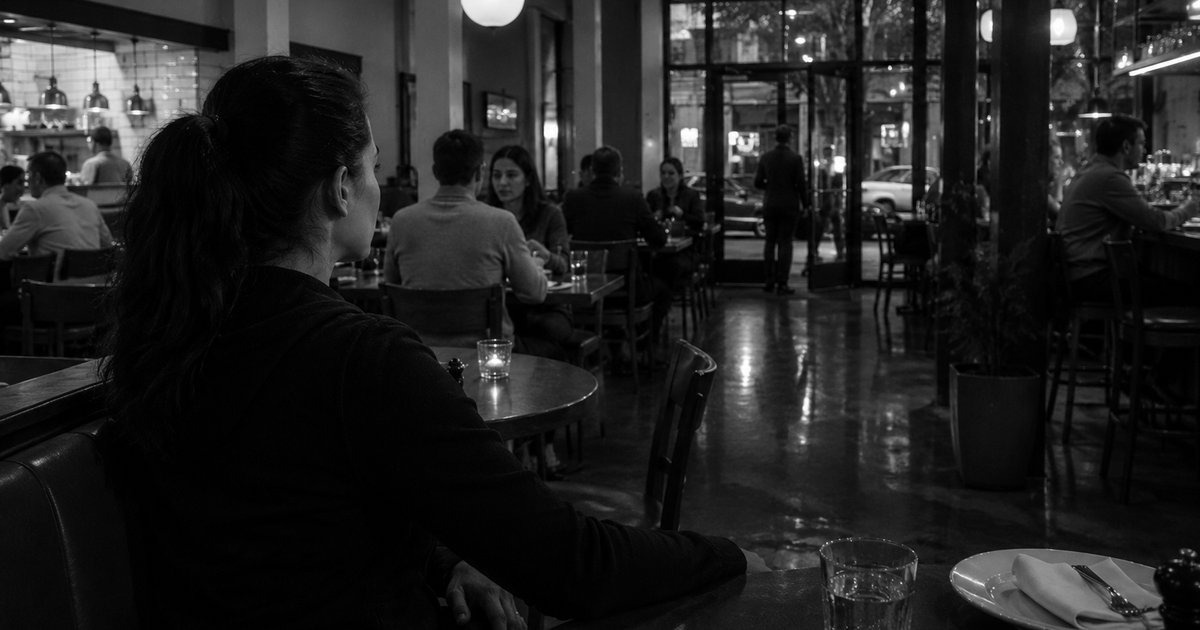
When you walk into a restaurant, a store, or a parking structure, you have a brief window where your attention is naturally heightened. Most people burn that window checking their phone. The trained person uses it.
Where are the exits? Who is already here? What does normal look like in this space right now? If something changed suddenly, where would I move?
This is not paranoia. It is a thirty-second scan that becomes automatic with a few weeks of practice. Most ETKM students report that within two to three weeks, the scan stops feeling like an exercise. It starts running in the background like a habit. You do not walk around in fear. You walk around informed.
The authors of Left of Bang put it this way: atmospherics are real data. When the vibe of a place changes, you do not just have a feeling. You have information. The trained response is to name it and act on it.
The Three-Question Scan
The threshold scripting framework includes a practical tool that works in any environment. Three questions, asked every time you enter a new space, before you sit down or settle in.
Where are the exits?
Where would I move if this situation changed?
What would give me a positional advantage if I needed it?
The first time you do this exercise, it feels deliberate and maybe a little awkward. By the fifth time, it takes less than thirty seconds. By the twentieth, you will do it without thinking about it.
This is what preparedness looks like in practice. It is not carrying a weapon or living on high alert. It is building small habits that give you information and options before you need them. A person who knows their exits does not need to panic when something goes wrong. They already know where to go.
Phone Down in Transitional Spaces
There is one specific habit change that produces more safety improvement than almost any other single adjustment.
Put your phone away in transitional spaces.
Parking lots. Stairwells. Elevators. ATMs. Gas stations. The walk from your car to the door. These are the spaces where most ambush-style crimes happen, because they are the spaces where people are most distracted and most predictable.
The Left of Bang framework is direct about this: you cannot baseline what you are not watching. If your face is in your phone while you cross a parking lot, you have given up the one advantage that costs nothing. The ability to see what is coming. You have given up the ability to see what is happening around you.
This is not about living in fear of parking lots. It is about recognizing that certain environments carry more risk than others, and adjusting your attention to match. You would not text while merging onto a highway. The parking lot deserves the same respect.
Your Map Needs Updating
Gonzales uses a concept from survival psychology that applies directly to everyday preparedness: the mental map. Everyone carries an internal model of what their environment looks like and how it works. The problem is that most people stop updating that map.
His principle is simple: do not force reality to fit your expectations. Update your expectations to fit reality.
The person walking to their car who notices someone shadowing their path has two options. The untrained response is to explain it away: “He is probably going the same direction.” The trained response is to update the map: “I may be getting targeted.” Angle off. Move toward light and people. Change direction and test whether the other person mirrors you.
One early correction beats ten late responses. A small adjustment when something first feels wrong is almost always low drama. Waiting until you are certain often means waiting until your options have already narrowed.
This is not a skill you need years of martial arts training to use. It is a way of paying attention that you can start practicing today.
Morrison’s Question, Applied
Morrison is not asking whether the world is dangerous. He is asking whether you have done anything about it.
The answer is not a one-time decision. It is not something you resolve by taking a single class or reading a single book. Preparedness is an ongoing practice that adjusts as your life adjusts. When your kids start driving, your preparation changes. When you move to a new neighborhood, your risk profile changes. When your work schedule shifts, your exposure changes.
The people who stay prepared are the ones who treat it as a background process, not a project with a finish line. They scan when they enter a space. They sit where they can see the door. They keep their phone down in parking lots. They know their exits. And they update those habits whenever their circumstances change.
At East Texas Krav Maga, we teach these habits alongside physical skills because they are inseparable. The best Krav Maga technique in the world does not help you if you never saw the threat coming. And the best awareness habits in the world need physical skills behind them for the moments when awareness alone is not enough.
Your Next Step
Schedule your free trial lesson at ETKM. Start building the physical skills and daily awareness habits that work together to keep you and your family safer.
Schedule Your Free Trial Lesson
Want to start with awareness before you step on the mat? Download our free guide to personal safety habits you can practice today.
Final article in the Tier 1 Civilian series: Preparedness Is Not a Skill Set. It’s How You Choose to Live


